Sunday, 5 August 2012

Billionaire college dropouts


 Bill Gates talked about how Mark Zuckerberg and he have a few things in common. "We both dropped out of Harvard.", Mr. Gates said. "I actually even gave a lecture at Harvard that said, if you have a great idea, don't worry about dropping out and he attended that lecture. So it is a funny connection there."Here's a look at 8 very successful dropouts.


A businessman, designer and inventor. Steve Jobs is best known as the co-founder, chairman and CEO of Apple.Net worth at the time of his death: $8.3 billion


Mark Zuckerberg wrote a program called Facemash in his dorm room at Harvard, that went on to be known as Facebook, the world's largest and most popular social networking site today. Zucker berg dropped out of Harvard University and moved to Palo Alto with Dustin Moskovitz to officially start Facebook.Net Worth: $17.5 billion

Ranked as the world's youngest self-made billionaire, Moskovitz attended Harvard University as an economics major for two years and dropped out to work full time on Facebook with Mark Zuckerberg.Net worth: $3.5 billion 

    Chairman and CEO of Dell, Michael Dell became the youngest CEO at the age of 27 to have his company ranked in the Fortune 500 list.Net worth: $15.9


    Larry Ellison dropped out of the University of Illinois at Urbana -Champaign due to the demise of his adoptive mother. He is the co-founder and CEO of Oracle.Net worth: $36 billion

    Azim Premji was voted among the twenty most powerful men in the world by Asiaweek. Forbes lists him as the third richest Indian and the 41st richest in the world.Net worth: $15.9 billion
    A business tycoon, computer programmer and philanthropist, Bill Gates is the Chairman of Microsoft and was ranked as the wealthiest man in 2011. He dropped out of Harvard to join Paul Allen at Honeywell in 1974.Net worth: $61 billion


      Sunday, 26 February 2012

      USB stick can sequence DNA in seconds


      It may look like an ordinary USB memory stick, but a little gadget that can sequence DNA while plugged into your laptop could have far-reaching effects on medicine and genetic research.
      The UK firm Oxford Nanopore built the device, called MinION, and claims it can sequence simple genomes – like those of some viruses and bacteria – in a matter of seconds. More complex genomes would take longer, but MinION could also be useful for obtaining quick results in sequencing DNA from cells in a biopsy to look for cancer, for example, or to determine the genetic identity of bone fragments at an archaeological dig.
      The company demonstrated today at the Advances in Genome Biology and Technology (AGBT) conference in Marco Island, Florida, that MinION has sequenced a simple virus called Phi X, which contains 5000 genetic base pairs.

      Proof of principle

      This is merely a proof of principle – "Phi X was the first DNA genome to be sequenced ever," says Nick Loman, a bioinformatician at the Pallen research group at the University of Birmingham, UK, and author of the blog Pathogens: Genes and Genomes. But it shows for the first time that this technology works, he says. "If you can sequence this genome you should be able to sequence larger genomes."
      Oxford Nanopore is also building a larger device, GridION, for lab use. Both GridION and MinION operate using the same technology: DNA is added to a solution containing enzymes that bind to the end of each strand. When a current is applied across the solution these enzymes and DNA are drawn to hundreds of wells in a membrane at the bottom of the solution, each just 10 micrometres in diameter.
      Within each well is a modified version of the protein alpha hemolysin (AHL), which has a hollow tube just 10 nanometres wide at its core. As the DNA is drawn to the pore the enzyme attaches itself to the AHL and begins to unzip the DNA, threading one strand of the double helix through the pore. The unique electrical characteristics of each base disrupt the current flowing through each pore, enough to determine which of the four bases is passing through it. Each disruption is read by the device, like a tickertape reader.
      <i>(Image: Oxford Nanopore Technologies)</i>

      Long strands, and simple

      This approach has two key advantages over other sequencing techniques: first, the DNA does not need to be amplified - a time-consuming process that replicates the DNA in a sample to make it abundant enough to make a reliable measurement.
      Second, the devices can sequence DNA strands as long as 10,000 bases continuously, whereas most other techniques require the DNA to be sheared into smaller fragments of at most a few hundred bases. This means that once they have been read they have to be painstakingly reassembled by software like pieces of a jigsaw. "We just read the entire thing in one go," as with Phi X, says Clive Brown, Oxford Nanopore's chief technology officer.
      But Oxford Nanopore will face stiff competition. Jonathan Rothberg, a scientist and entrepreneur who founded rival firm 454 Life Sciences, also announced at the AGBT conference that his start-up company, Ion Torrent, will be launching a desktop sequencing machine. Dubbed the Ion Proton, it identifies bases by using transistors to detect hydrogen ions as they are given off during the polymerisation of DNA.
      This device will be capable of sequencing a human genome in 2 hours for around $1000, Rothberg claims. Nanopores are an "elegant" technology, he says, but Ion Torrent already has a foot in the door. "As we saw last summer with the E. coli outbreak in Germany, people are already now using it," he says.

      Pocketful of DNA

      The GridION will take several hours to complete a human genome, by contrast. The MinION, while not designed for full human genome sequencing, will be marketed for use in shorter sequencing tasks like identifying pathogens, or screening for genetic mutations that can increase risk of certain diseases. Each MinION is expected to cost $900 when it goes on sale later this year.
      "The biggest strength of nanopore sequencing is that it generates very long reads, which has been a limitation for most other technologies," says Loman. If the costs, quality, ease of use and throughput can be brought in line with other instruments, it will be a "killer technology" for sequencing, he says.
      As for clinical applications, David Rasko at the Institute for Genome Sciences at the University of Maryland in Baltimore, says the MinION could have huge benefits. "It may have serious implications for public health and it could really change the way we do medicine," he says. "You can see every physician walking around the hospital with a pocketful of these things." And it will likely increase the number of scientists generating sequencing data by making the technology cheaper and more accessible.

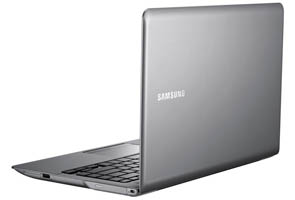
      Samsung unveils two new ultrabooks

      This has been a busy week for the ultrabook market, with Wipro and HP having announced their offerings earlier this week and Samsung following suit yesterday.
      Samsung unveiled two new ultrabooks, a 13" model and a 14" model. Both the variants sport Intel's second generation i5 processors.
      The 13" model comes with 4gb of RAM, a 500 GB hard disk and a built in 16GB of ExpressCache, which is essentially a hard-disk-SSD hybrid. The OS is installed on the 16GB partition, allowing for blazing fast boot speeds while the 500GB hard drive (5400 RPM) serves as a storage drive. The ultrabook can also be configured to house a whopping 8GB of RAM. The 13 inch weighs in at a meager 1.42 kilograms.
      The so called bigger brother, the 14 inch model sports the same Intel i5 processor, but comes with a higher 6GB of RAM. It also features a 1TB hard drive (5400 RPM) along with a 16GB of ExpressCache. A key addition to the 15 inch variant is the AMD Radeon HD 7550M graphic card with a whopping 1GB memory. Adding discrete graphics to the ultrabook segment could be a winning move for Samsung. The bigger screen and discrete graphics add to the weight of the ultrabook, but not by a whole lot as it weighs in at just 1.79 kilograms.
      Both machines come with a slew of ports such as USB 3.0, USB 2.0 and memory card slots (SD,SDHC,SDXC,MMC). Windows 7 Home Premium comes pre-installed on both the machines.
      It would be interesting to see how Samsung's offerings compete with the HP Folio and the Wipro E.go. The HP Folio comes with stock 128 GB SSD and the E.go flaunts the "slimmest ultrabook" status. Not to mention, Samsung claims a 6 hour battery life on their ultrabooks, a significant 3 hours less than what HP is offering on the Folio, but then again, the Folio costs Rs. 70,000 while the Samsung offerings are much cheaper at Rs. 48,900 and Rs. 54,300 for the 13" and 14" models respectively.

      Wednesday, 1 February 2012

      Apple iphone siri...

      the siri iphone to watch...... full of voice command access....

      Magnetic soap could clean up oil spills

      A soap that responds to magnetic fields could be used to clean up oil spills without leaving behind detergents that can harm surrounding wildlife. 

      Researchers at the University of Bristol, UK dissolved iron particles in water that contained chlorine and bromine ions, materials which are commonly found in household products such as mouthwash or fabric cleaner. This created a metallic centre within the soap particles that could be influenced by a nearby magnetic field.

      The team tried out their new soap by placing it in a test tube beneath layers of water and an oil-like substance. Using a magnet, they were able to overcome both gravity and surface tension to lift the soap through the layers and out of the tube.
      MagneticSoap.jpg
      This test shows that it is much easier to remove magnetic soaps from mixtures of other liquids, suggesting they could be used in response to environmental disasters such as oil spills, whereconcerns have been raised about the cleaning substances in use. A magnetic soap could easily be collected after cleaning, reducing the environmental impact.

      Magnetic soaps could also have a range of industrial applications thanks to their ability to change properties such as electrical conductivity or melting point at will with a magnetic on/off switch. These properties are normally altered by adding an electric charge or changing the pH, temperature or pressure of the substance, meaning they can not be reversed.