Showing posts with label TECH NEWS. Show all posts

Wednesday, 5 September 2012

Nokia launches Lumia 920 with windows phone 8


Nokia unveiled on Wednesday in New York City the Lumia 920 phone, which will introduce the next phase of Windows Phone to run on Windows 8.
The news comes just one day after Apple announced its next-generation iPhone event on Sept. 12, heightening the need for rivals to come out with truly competitive devices.
The new flagship phone supports wireless charging and Nokia’s PureView 41MP camera, along with a 1080p HD camcorder. Its “floating lens” optical image stabilization technology allows users to take sharp, crisp pictures even when it’s dim. It packs a Qualcomm Snapdragon S4 processor and built-in wireless charging.
The device also introduced “Nokia City Lens” and “Nokia Maps,” true offline maps with augmented reality. By pointing the Lumia 900 at a city block, the phone reveals virtual “signs” beside the storefronts, with business and location information.
Last year around this time, Nokia announced its two Windows Phone devices — the Lumia 710 and Lumia 800 — during Nokia World in London. The devices were the first phones to run Windows Phone 7, and the first phones to result out of Nokia’s partnership with Microsoft.
However, this isn’t the first Windows 8 device to hit the scene. Samsung last week announced its Windows Phone 8 during the 2012 IFA conference in Berlin, deflecting some of the attention away from Nokia.
But Nokia has a tall order to live up to — in fact, its Lumia 900 device was dubbed one of the best Windows phones to ever hit the market.
Earlier this year, Microsoft announced plans to grow its Windows Phone operating system. Windows Phone 8 is reworked from the ground up and is compatible with Windows 8 itself.

Thursday, 23 August 2012

Fingertip tingle enhances a surgeon's sense of touch

OUR fingers are precision instruments, but there are plenty of things they are not sensitive enough to detect. Now we can augment their talents – using wearable electronic fingertips that provide tingling feedback about whatever we touch.
John Rogers of the University of Illinois at Urbana-Champaign and colleagues have designed a flexible circuit that can be worn over the fingertips. It contains layers of gold electrodes just a few hundred nanometres thick, sandwiched between layers of polyimide plastic to form a "nanomembrane". This is mounted on a finger-shaped tube of silicone rubber, allowing one side of the circuit to be in direct contact with the fingertips. On the other side, sensors can be added to measure pressure, temperature or electrical properties such as resistance.

Nanotechnology at your fingertips <i>(Image: John Rogers/University of Illinois at Urbana-Champaign)</i> 

People wearing the device receive electrotactile stimulation – a tingling sensation caused by a small voltage applied to the skin. The size of the voltage is controlled by the sensor and varies depending on the properties of the object being touched.
Surgical gloves are one potential application. Rogers, who worked with colleagues at Northwestern University in Evanston, Illinois, and Dalian University of Technology in China, says gloves fitted with the nanomembrane could sense the thickness or composition of tissue via its electrical properties. A surgeon could also whittle away at the tissue using a high-frequency alternating current supplied by a battery attached at the wrist and delivered via the nanomembrane itself, says Rogers.
Fiorenzo Omenetto at Tufts University in Medford, Massachusetts, is impressed. "The work sets the stage for a new generation of devices," he says.
There are applications beyond surgery, too. MC10, the company commercialising the technology, is running animal trials of a nanomembrane "sock" that can be wrapped around the heart. This provides a 3D map of its electrical activity, useful in treating irregular heartbeat.
MC10 is also working with medical device company Medronic to use the membrane inside the heart, sending it in on a limp balloon, which is then inflated to push the membrane onto the heart's interior walls.
Rogers says MC10 is also collaborating with sportswear firm Reebok on a product to be launched by the end of this year. The aim is to build a "body-worn piece of electronics" designed for contact sports, although Rogers declined to say exactly how it will be used.

Sunday, 5 August 2012

Billionaire college dropouts


 Bill Gates talked about how Mark Zuckerberg and he have a few things in common. "We both dropped out of Harvard.", Mr. Gates said. "I actually even gave a lecture at Harvard that said, if you have a great idea, don't worry about dropping out and he attended that lecture. So it is a funny connection there."Here's a look at 8 very successful dropouts.


A businessman, designer and inventor. Steve Jobs is best known as the co-founder, chairman and CEO of Apple.Net worth at the time of his death: $8.3 billion


Mark Zuckerberg wrote a program called Facemash in his dorm room at Harvard, that went on to be known as Facebook, the world's largest and most popular social networking site today. Zucker berg dropped out of Harvard University and moved to Palo Alto with Dustin Moskovitz to officially start Facebook.Net Worth: $17.5 billion

Ranked as the world's youngest self-made billionaire, Moskovitz attended Harvard University as an economics major for two years and dropped out to work full time on Facebook with Mark Zuckerberg.Net worth: $3.5 billion 

    Chairman and CEO of Dell, Michael Dell became the youngest CEO at the age of 27 to have his company ranked in the Fortune 500 list.Net worth: $15.9


    Larry Ellison dropped out of the University of Illinois at Urbana -Champaign due to the demise of his adoptive mother. He is the co-founder and CEO of Oracle.Net worth: $36 billion

    Azim Premji was voted among the twenty most powerful men in the world by Asiaweek. Forbes lists him as the third richest Indian and the 41st richest in the world.Net worth: $15.9 billion
    A business tycoon, computer programmer and philanthropist, Bill Gates is the Chairman of Microsoft and was ranked as the wealthiest man in 2011. He dropped out of Harvard to join Paul Allen at Honeywell in 1974.Net worth: $61 billion


      Sunday, 26 February 2012

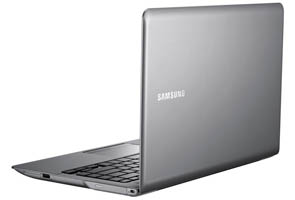
      Samsung unveils two new ultrabooks

      This has been a busy week for the ultrabook market, with Wipro and HP having announced their offerings earlier this week and Samsung following suit yesterday.
      Samsung unveiled two new ultrabooks, a 13" model and a 14" model. Both the variants sport Intel's second generation i5 processors.
      The 13" model comes with 4gb of RAM, a 500 GB hard disk and a built in 16GB of ExpressCache, which is essentially a hard-disk-SSD hybrid. The OS is installed on the 16GB partition, allowing for blazing fast boot speeds while the 500GB hard drive (5400 RPM) serves as a storage drive. The ultrabook can also be configured to house a whopping 8GB of RAM. The 13 inch weighs in at a meager 1.42 kilograms.
      The so called bigger brother, the 14 inch model sports the same Intel i5 processor, but comes with a higher 6GB of RAM. It also features a 1TB hard drive (5400 RPM) along with a 16GB of ExpressCache. A key addition to the 15 inch variant is the AMD Radeon HD 7550M graphic card with a whopping 1GB memory. Adding discrete graphics to the ultrabook segment could be a winning move for Samsung. The bigger screen and discrete graphics add to the weight of the ultrabook, but not by a whole lot as it weighs in at just 1.79 kilograms.
      Both machines come with a slew of ports such as USB 3.0, USB 2.0 and memory card slots (SD,SDHC,SDXC,MMC). Windows 7 Home Premium comes pre-installed on both the machines.
      It would be interesting to see how Samsung's offerings compete with the HP Folio and the Wipro E.go. The HP Folio comes with stock 128 GB SSD and the E.go flaunts the "slimmest ultrabook" status. Not to mention, Samsung claims a 6 hour battery life on their ultrabooks, a significant 3 hours less than what HP is offering on the Folio, but then again, the Folio costs Rs. 70,000 while the Samsung offerings are much cheaper at Rs. 48,900 and Rs. 54,300 for the 13" and 14" models respectively.

      Wednesday, 1 February 2012

      Magnetic soap could clean up oil spills

      A soap that responds to magnetic fields could be used to clean up oil spills without leaving behind detergents that can harm surrounding wildlife. 

      Researchers at the University of Bristol, UK dissolved iron particles in water that contained chlorine and bromine ions, materials which are commonly found in household products such as mouthwash or fabric cleaner. This created a metallic centre within the soap particles that could be influenced by a nearby magnetic field.

      The team tried out their new soap by placing it in a test tube beneath layers of water and an oil-like substance. Using a magnet, they were able to overcome both gravity and surface tension to lift the soap through the layers and out of the tube.
      MagneticSoap.jpg
      This test shows that it is much easier to remove magnetic soaps from mixtures of other liquids, suggesting they could be used in response to environmental disasters such as oil spills, whereconcerns have been raised about the cleaning substances in use. A magnetic soap could easily be collected after cleaning, reducing the environmental impact.

      Magnetic soaps could also have a range of industrial applications thanks to their ability to change properties such as electrical conductivity or melting point at will with a magnetic on/off switch. These properties are normally altered by adding an electric charge or changing the pH, temperature or pressure of the substance, meaning they can not be reversed.

      Tuesday, 24 January 2012

      Twitter buys anti-malware firm Dasient

      Micro-blogging site Twitter has acquired internet security firm Dasient for an undisclosed amount. Dasient, which was founded in 2008, is focused on web-scale security problems involving malware and other types of online abuses.

      Twitter, created in 2006, is a communication platform allowing people across the world to interact instantly through 'tweets', or messages not exceeding 140 characters. Twitter has more than 100 million active users worldwide.


      "The Dasient team is excited to announce that we have been acquired by Twitter! Effective immediately, we will be bringing our technology, tools, and team to the revenue engineering team at Twitter," Dasient Co-Founder and Chief Technology Officer Neil Daswani said in a blog post yesterday.

      However, the company has not disclosed the financial details of the deal. In 2009, Dasient launched its web anti-malware platform,capable of scanning URLs and websites for the presence of harmful content. In 2010, Dasient launched the industry's first 'anti-malvertising' service to protect ad networks and publishers from the scourge of malicious ads.


      "Over the last year, we have been very active in securing the ads and content of the some of the industry's largest ad networks and web sites," Daswani added. By joining Twitter, Dasient will be able to apply its technology and team to the world's largest real-time information network.

      As part of the merger, Dasient is winding down its business and is no longer able to accept new customers. In December last year, Twitter received a combined investment of USD 300 million from Saudi Prince Alwaleed Bin Talal Bin Abdulaziz Alsaud and his investment firm Kingdom Holding Company (KHC).

      Google Plus user base crosses 90 million mark

      Google's online social networking service 'Google Plus' has crossed 90 million users mark since its launch in June. Google Plus now has attracted 90 million users,reflecting the huge interest in the social networking site which was opened to the public on September 20. That more than doubles the 40 million that Google reported in October.

      Earlier, Google Plus service was available only through invitation as part of trial runs. Interestingly, rival Facebook took about four years to reach 90 million users. Facebook, founded in 2004, has now 800 million users globally. 

      "I am super excited about the growth of ... Google Plus,which now has 90 million users globally  well over double what I announced just three months ago. By building a meaningful relationship with our users through Google Plus we will create amazing experiences across our services," Google CEO Larry Page said while announcing the company's latest quarterly earnings.

      Google unveiled 'Google Plus' in late June as part of efforts to garner a share of the lucrative social networking space that has so far been dominated by Mark Zuckerberg led Facebook. 

      Since launch, Google has added toolbars and other buttons on its websites to aggressively promote the service. During the quarter, Google has reported a net income to USD 2.71 billion in for October-December, which analysts termed as below market expectation.It registered revenue of USD 10.58 billion for the quarter ended December 31, 2011, an increase of 25 per cent from the year-ago period. 

      Wednesday, 4 January 2012

      Smart Guide to 2012: The US cyber election

      The way we live our lives online will make it easier for US presidential candidates to target their message

      Do you live in Ohio and tweet about your church? The Republicans would like to have a word with you. Live in California and post pictures of your Toyota Prius? Barack Obama would like you to start a fundraising page.
      The US presidential election in November 2012 is likely to be the most data-intensive campaign in history. The reason? We are sharing more information about ourselves - our interests, social connections and online behaviour - than ever. Savvy candidates can increasingly use this data to predict how we are likely to vote, which of us to target and how best to reach us.
      In 2008, Obama's campaign used online social networks to not only get the word out, but also to track which issues groups of voters cared about most. They built computer models of voting districts that helped determine where to best focus money and volunteers during last minute, on-the-ground campaigning.
      2012 could see campaigns bring this kind of data-assisted decision-making to the level of individual voters. Campaign strategists have long combined voter registration data with consumer databases and census information to construct voter profiles consisting of thousands of variables, such as the size of someone's house, or what magazines they read. Now these profiles can be beefed-up with real-time analysis of political sentiment via Twitter and blog posts.
      Detailed information about individual voter interests and key political issues could also allow campaigns to craft narrowly targeted messages. Do you tweet about your love for Battlestar Galactica? Don't be surprised if the political messages you see online through banner ads or sponsored links are tailored towards a candidate's stance on science or space exploration.
      Whether this kind of customised campaigning comes across as charming or creepy remains to be seen. But with about half of all Americans now on Facebook, voters will have to get used to campaigns using their information in all kinds of ways. Combine these huge data sets with sophisticated prediction algorithms and 2012 could mark the rise of the ultimate political machine.

      Thursday, 29 September 2011

      Theaters group upset Sony to end free 3-D glasses

      Sony Corp.'s movie studio will save millions of dollars per movie after it told theater owners it will stop paying for 3-D glasses next May. But moviegoers could end up footing the bill.

      Sony Pictures suggested in letters sent the last few days to U.S. theater owners that they adopt a "guest ownership model" prevalent in Europe and Australia and charge patrons separately for the glasses, which they can re-use on future visits.

      RealD Inc., one of the main suppliers of glasses, said a pair in Europe sells for about a euro, or around $1.36 at today's exchange rate. Most patrons spend more than $3 on popcorn and sodas each, according to major theater chain Regal Entertainment Group, and the average ticket to a 3-D movie already costs a few dollars more than a ticket to a traditional showing.

      There also are designer 3-D glasses that run more than $100 a pair.

      The change Sony's planning would come just before Sony is to release its 3-D blockbusters for next summer, "The Amazing Spider-Man" and "Men in Black III," although some of Sony's 3-D movies, including "Arthur Christmas," come out earlier.

      Sony Pictures spokesman Steve Elzer said in a statement that "there are constructive ways to deal with the cost of 3-D glasses that will not adversely impact consumers and can also help the environment." He called on theater owners to come to the table to work out the issue.

      Usually, such negotiations happen behind closed doors. In this case, Sony going public with its new policy didn't sit well with theater owners. The nation's largest cinema trade group, the National Association of Theatre Owners, said the unilateral policy change was "insensitive" to consumers in a weak economy.

      Regal Entertainment Group on Wednesday threatened to cut the number of screens showing 3-D films if the move means it or its patrons will have to pay more.

      "To the extent that Sony seeks to change the current model in a manner that shifts costs to exhibitors, we would be forced to evaluate this new economic model and program our screens accordingly," said Regal CEO Amy Miles in a statement.

      Theater association president John Fithian said Sony's decision upends a six-year old practice of splitting the costs of the rollout of digital 3-D screens across the country.

      While movie studios have paid for 3-D glasses and the cost of digital projectors and equipment - expecting to save on film printing costs in the future - theaters have paid for 3-D add-on technology and labor costs.

      Sony's Elzer said there has never been an agreement that studios would always bear the cost of 3-D glasses.

      The squabble comes amid changes in the movie business that have hurt studios' profits. People are buying fewer DVDs and aren't paying enough for Blu-ray discs, on-demand movie downloads, or online subscriptions to make up for the decline. Studios are trying to cut costs by laying off workers and cutting movie budgets.

      Fithian said the belt-tightening shouldn't result in passing the buck to theater owners or moviegoers. "It is nonsensical to say theater owners and our patrons should be paying for their mistakes in the home market," he said.

      It remains to be seen if other studios will follow Sony's lead and stop paying for the glasses. Time Warner Inc.'s Warner Bros. said it was sticking with its arrangements with theaters for now.

      "We are evaluating the situation," said Chris Aronson, senior vice president of domestic distribution for News Corp.'s 20th Century Fox.

      Representatives from Viacom Inc.'s Paramount, Comcast Corp.'s Universal and The Walt Disney Co. did not immediately respond to requests for comment.

      One immediate result of the announced change was that RealD shares plunged $1.80, or 14.7 percent, to close at $10.42 in trading Wednesday. RealD supplies technology for about 90 percent of the 3-D screens in the U.S. and is a major supplier of the glasses, which made up about 40 percent of its revenue in the most recent quarter.

      RealD spokesman Rick Heineman said the company is fine with any new model, including one in which consumers pay. He compared that system to buying headphones on an airplane. The core profit of the company comes through licensing its technology, he said.

      Sony shares rose 12 cents to close at $19.34.

      Friday, 16 September 2011

      Google adds more IBM patents to tech arsenal

      Google confirmed on Thursday that it has added 1,023 more IBM patents to its technology arsenal to fend off legal attacks by rivals such as Apple and Microsoft.

      The purchases added to the 1,000 or so patents the California-based Internet firm bought from IBM in July and reportedly ranged from mobile software to computer hardware and processes.

      Google spokesman Jim Prosser told AFP that the patent transfers had taken place but would not disclose financial terms of the deal or specifics regarding the intellectual property.
      The push by Google to strengthen its patent portfolio comes as the fight for dominance in the booming smartphone market increasingly involves lawsuits claiming infringement of patented technology.

      Smartphone titan HTC Corp. this month ramped up its patent war with Apple with the help of ammunition provided by Google, the force behind Android mobile software.

      Google transferred a set of patents to HTC that the Taiwan-based company used to amend intellectual property infringement complaints against iPhone maker Apple in the United States.

      In August, HTC accused Apple of patent infringement as part of an ongoing legal battle.

      In a lawsuit filed in US District Court in the state of Delaware, the Taiwanese smartphone maker charged that Apple violated three HTC-held patents in its Macintosh computers, iPods, iPhones, iPads and other products.

      HTC also filed a complaint with the Washington-based US International Trade Commission.

      Technology giants have taken to routinely pounding one another with patent lawsuits. Apple has accused HTC and other smartphone makers using Google's Android mobile operating system of infringing on Apple-held patents.

      Some of the nine patents that HTC got from Google had belonged to Motorola Mobility, which Google is buying for $12.5 billion in cash.

      Motorola Mobility's trove of patents was a key motivation for Google, which is keen to defend Android.

      "Our acquisition of Motorola will increase competition by strengthening Google's patent portfolio, which will enable us to better protect Android from anti-competitive threats from Microsoft, Apple and other companies," Google chief executive Larry Page said when the Motorola Mobility buy was announced.

      Motorola Mobility chief executive Sanjay Jha told financial analysts the US maker of smartphones and touchscreen tablet computers has over 17,000 issued patents and another 7,500 pending.

      Wednesday, 7 September 2011

      Philips launches 'green' mobile phones in India

      Philips has launched a new range of environment friendly mobile phones in the India, called the Xenium series.

      The phones will use green technologies and will include intelligent power management systems,  including two months of stand-by time.

      The series consists of 6 feature phones, all of which use a proprietary operating system.

      The most expensive of the phones is the X806 with a 3-inch touch display, 5-megapixel autofocus camera and upto 8 GB of memory via a microSD card. It costs Rs 8,280.


      The X518, at Rs 5,976, comes with 2.8-inch display, a 2-megapixel camera with flash and up-to 16 GB of memory via a microSD card.

      The solid bar X523 is cheaper, at Rs 4,992, and is loaded with a 3.2-megapixel camera and a 32 GB memory card.

      The three cheapest phones are the X513, X116 and X121 which cost Rs 4,776, Rs 2,760 and Rs 1,776 respectively.