Sunday, 26 February 2012

USB stick can sequence DNA in seconds


It may look like an ordinary USB memory stick, but a little gadget that can sequence DNA while plugged into your laptop could have far-reaching effects on medicine and genetic research.
The UK firm Oxford Nanopore built the device, called MinION, and claims it can sequence simple genomes – like those of some viruses and bacteria – in a matter of seconds. More complex genomes would take longer, but MinION could also be useful for obtaining quick results in sequencing DNA from cells in a biopsy to look for cancer, for example, or to determine the genetic identity of bone fragments at an archaeological dig.
The company demonstrated today at the Advances in Genome Biology and Technology (AGBT) conference in Marco Island, Florida, that MinION has sequenced a simple virus called Phi X, which contains 5000 genetic base pairs.

Proof of principle

This is merely a proof of principle – "Phi X was the first DNA genome to be sequenced ever," says Nick Loman, a bioinformatician at the Pallen research group at the University of Birmingham, UK, and author of the blog Pathogens: Genes and Genomes. But it shows for the first time that this technology works, he says. "If you can sequence this genome you should be able to sequence larger genomes."
Oxford Nanopore is also building a larger device, GridION, for lab use. Both GridION and MinION operate using the same technology: DNA is added to a solution containing enzymes that bind to the end of each strand. When a current is applied across the solution these enzymes and DNA are drawn to hundreds of wells in a membrane at the bottom of the solution, each just 10 micrometres in diameter.
Within each well is a modified version of the protein alpha hemolysin (AHL), which has a hollow tube just 10 nanometres wide at its core. As the DNA is drawn to the pore the enzyme attaches itself to the AHL and begins to unzip the DNA, threading one strand of the double helix through the pore. The unique electrical characteristics of each base disrupt the current flowing through each pore, enough to determine which of the four bases is passing through it. Each disruption is read by the device, like a tickertape reader.
<i>(Image: Oxford Nanopore Technologies)</i>

Long strands, and simple

This approach has two key advantages over other sequencing techniques: first, the DNA does not need to be amplified - a time-consuming process that replicates the DNA in a sample to make it abundant enough to make a reliable measurement.
Second, the devices can sequence DNA strands as long as 10,000 bases continuously, whereas most other techniques require the DNA to be sheared into smaller fragments of at most a few hundred bases. This means that once they have been read they have to be painstakingly reassembled by software like pieces of a jigsaw. "We just read the entire thing in one go," as with Phi X, says Clive Brown, Oxford Nanopore's chief technology officer.
But Oxford Nanopore will face stiff competition. Jonathan Rothberg, a scientist and entrepreneur who founded rival firm 454 Life Sciences, also announced at the AGBT conference that his start-up company, Ion Torrent, will be launching a desktop sequencing machine. Dubbed the Ion Proton, it identifies bases by using transistors to detect hydrogen ions as they are given off during the polymerisation of DNA.
This device will be capable of sequencing a human genome in 2 hours for around $1000, Rothberg claims. Nanopores are an "elegant" technology, he says, but Ion Torrent already has a foot in the door. "As we saw last summer with the E. coli outbreak in Germany, people are already now using it," he says.

Pocketful of DNA

The GridION will take several hours to complete a human genome, by contrast. The MinION, while not designed for full human genome sequencing, will be marketed for use in shorter sequencing tasks like identifying pathogens, or screening for genetic mutations that can increase risk of certain diseases. Each MinION is expected to cost $900 when it goes on sale later this year.
"The biggest strength of nanopore sequencing is that it generates very long reads, which has been a limitation for most other technologies," says Loman. If the costs, quality, ease of use and throughput can be brought in line with other instruments, it will be a "killer technology" for sequencing, he says.
As for clinical applications, David Rasko at the Institute for Genome Sciences at the University of Maryland in Baltimore, says the MinION could have huge benefits. "It may have serious implications for public health and it could really change the way we do medicine," he says. "You can see every physician walking around the hospital with a pocketful of these things." And it will likely increase the number of scientists generating sequencing data by making the technology cheaper and more accessible.

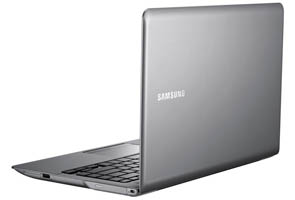
Samsung unveils two new ultrabooks

This has been a busy week for the ultrabook market, with Wipro and HP having announced their offerings earlier this week and Samsung following suit yesterday.
Samsung unveiled two new ultrabooks, a 13" model and a 14" model. Both the variants sport Intel's second generation i5 processors.
The 13" model comes with 4gb of RAM, a 500 GB hard disk and a built in 16GB of ExpressCache, which is essentially a hard-disk-SSD hybrid. The OS is installed on the 16GB partition, allowing for blazing fast boot speeds while the 500GB hard drive (5400 RPM) serves as a storage drive. The ultrabook can also be configured to house a whopping 8GB of RAM. The 13 inch weighs in at a meager 1.42 kilograms.
The so called bigger brother, the 14 inch model sports the same Intel i5 processor, but comes with a higher 6GB of RAM. It also features a 1TB hard drive (5400 RPM) along with a 16GB of ExpressCache. A key addition to the 15 inch variant is the AMD Radeon HD 7550M graphic card with a whopping 1GB memory. Adding discrete graphics to the ultrabook segment could be a winning move for Samsung. The bigger screen and discrete graphics add to the weight of the ultrabook, but not by a whole lot as it weighs in at just 1.79 kilograms.
Both machines come with a slew of ports such as USB 3.0, USB 2.0 and memory card slots (SD,SDHC,SDXC,MMC). Windows 7 Home Premium comes pre-installed on both the machines.
It would be interesting to see how Samsung's offerings compete with the HP Folio and the Wipro E.go. The HP Folio comes with stock 128 GB SSD and the E.go flaunts the "slimmest ultrabook" status. Not to mention, Samsung claims a 6 hour battery life on their ultrabooks, a significant 3 hours less than what HP is offering on the Folio, but then again, the Folio costs Rs. 70,000 while the Samsung offerings are much cheaper at Rs. 48,900 and Rs. 54,300 for the 13" and 14" models respectively.

Wednesday, 1 February 2012

Apple iphone siri...

the siri iphone to watch...... full of voice command access....

Magnetic soap could clean up oil spills

A soap that responds to magnetic fields could be used to clean up oil spills without leaving behind detergents that can harm surrounding wildlife. 

Researchers at the University of Bristol, UK dissolved iron particles in water that contained chlorine and bromine ions, materials which are commonly found in household products such as mouthwash or fabric cleaner. This created a metallic centre within the soap particles that could be influenced by a nearby magnetic field.

The team tried out their new soap by placing it in a test tube beneath layers of water and an oil-like substance. Using a magnet, they were able to overcome both gravity and surface tension to lift the soap through the layers and out of the tube.
MagneticSoap.jpg
This test shows that it is much easier to remove magnetic soaps from mixtures of other liquids, suggesting they could be used in response to environmental disasters such as oil spills, whereconcerns have been raised about the cleaning substances in use. A magnetic soap could easily be collected after cleaning, reducing the environmental impact.

Magnetic soaps could also have a range of industrial applications thanks to their ability to change properties such as electrical conductivity or melting point at will with a magnetic on/off switch. These properties are normally altered by adding an electric charge or changing the pH, temperature or pressure of the substance, meaning they can not be reversed.

Sony's Stringer steps down as president, CEO

Howard Stringer, the Welsh-born American head of Japanese games, music and electronics giant Sony, is to step down as the firm's president and CEO, the company said Wednesday.

He will be succeeded by Kazuo Hirai, a games and music veteran at the company, who will take over as president and CEO in April, a statement said, while Stringer will become chairman of the board of directors in June.

"I look forward to helping Kaz in every way I can so that succession leads inevitably to success," said Stringer. "He is ready to lead, and the time to make this change is now."

Hirai, 51, played a major role in developing the PlayStation in the 1990s and has spent most of his career at Sony in videogames, movies, music and other software businesses.

"As challenging as times are for Sony now, were it not for the strong leadership of Sir Howard Stringer these past seven years, we would have been in a much more difficult position," he said.

The Tokyo-based maker of PlayStation consoles and Bravia television sets is projecting an annual net loss of 90 billion yen ($1.2 billion), its fourth consecutive year in the red, as it reels from the impact of a strong yen, weak sales and severe flooding in Thailand.

Tuesday, 24 January 2012

Twitter buys anti-malware firm Dasient

Micro-blogging site Twitter has acquired internet security firm Dasient for an undisclosed amount. Dasient, which was founded in 2008, is focused on web-scale security problems involving malware and other types of online abuses.

Twitter, created in 2006, is a communication platform allowing people across the world to interact instantly through 'tweets', or messages not exceeding 140 characters. Twitter has more than 100 million active users worldwide.


"The Dasient team is excited to announce that we have been acquired by Twitter! Effective immediately, we will be bringing our technology, tools, and team to the revenue engineering team at Twitter," Dasient Co-Founder and Chief Technology Officer Neil Daswani said in a blog post yesterday.

However, the company has not disclosed the financial details of the deal. In 2009, Dasient launched its web anti-malware platform,capable of scanning URLs and websites for the presence of harmful content. In 2010, Dasient launched the industry's first 'anti-malvertising' service to protect ad networks and publishers from the scourge of malicious ads.


"Over the last year, we have been very active in securing the ads and content of the some of the industry's largest ad networks and web sites," Daswani added. By joining Twitter, Dasient will be able to apply its technology and team to the world's largest real-time information network.

As part of the merger, Dasient is winding down its business and is no longer able to accept new customers. In December last year, Twitter received a combined investment of USD 300 million from Saudi Prince Alwaleed Bin Talal Bin Abdulaziz Alsaud and his investment firm Kingdom Holding Company (KHC).

Dell Latitude ATG 6420


Laptops built for rough and tumble use are fairly niche and not ideal for everyday use. Their rugged build hinders portability and, unless you are a hiker or adventure sportsman, you will get better value for money elsewhere. Nonetheless, if you are the sort who spends most of your time outdoors and are looking for a laptop that will not be damaged with a fall, then there is a whole category of hard use fdevices you should consider.

Today we have with us the Dell Latitude ATG which looks like it's built more for combat than computing. Will this be your next adventure sport gadget?

dell-atg-5.jpg

Build/design and ports

The build of the Dell Latitude ATG is fantastic. It's strong, rugged and made out of some very hard plastic with a black rubberized finish around its border. The top of the lid is brushed aluminum grey with black rubberized bordering and the device is so strong that we actually stood on it for a bit and it didn't even flinch under our weight.

Keep the device closed and it looks just like a briefcase thanks to its handle and square design. Since the device is heavy, this isn't a flimsy briefcase either. It is strong enough to be swung at someone and cause some damage.

Adding to the overall look and outdoor utility is the fact that all the ports on this laptop have a rubberized cover. These covers help prevent the device from exposure to dust and dirt in an outdoor open environment. The device even has a DVD drive. This adds a little to its weight and size but it's a fair trade-off considering now you don't need to carry that external CD drive.

One of the biggest drawbacks of the device is that the ports are all over the place. The SD card reader rests on the front panel. Its position is a little inconvenient as it is very close to the briefcase style handle. To the right of the device you have two USB 2.0 ports along with an e-SATA cum USB 2.0 port. The right also has the CD drive along with a Wi-Fi on/off toggle. The left of the device houses a VGA out, one USB 2.0 port and the headphones jack. To the left rear of the device we have an Ethernet port along with the DC in. To the right rear of the device we have the HDMI out.

The overall placement of the ports is convenient but fell scattered. The design of the device isn't eye candy and resembles the bombing PC found in the Call of Duty video games, which isn't necessarily a bad thing.

dell-atg-2.jpg

Keyboard and track pad

Open up the device and you are greeted with a compact and well laid out keyboard. It isn't chicklet style but is surprisingly comfortable to type on. The keys are springy and feel well-built. We bashed our fingers real hard on this rugged machine only to find out fingers hurt but keyboard stays intact. Laughs apart, the keyboard is seriously one of the best in the business.

Controlling the mouse however is a mixed experience. You have the pointing stick (why do they still make that? It's horrible!), which isn't the best way to control the mouse. The pointing stick rests between the G, H and B button whereas the left and right click rests under the spacebar. The other is a standard track-pad with a dedicated left and right click. The track pad isn't as large as the one you'd find on a MacBook but it's enough to get the job done. Made out of plastic, the trackpad is fairly smooth and comfortable to use. The same cannot be said about the pointing stick, which we just hate.

dell-atg-1.jpg

Display and audio

The device has a 14-inch display with a resolution of 1366x768 and is a touchscreen. The screen has a rugged black border surrounding it. The best part about the screen is that its brightness and contrast is quite high making it ideal for use in an outdoor situation. The colours look rich and vibrant and the screen is susceptible to very little glare.

The audio on the device is what you can expect from an average laptop. The speakers are loud, lack bass and have a high midrange. The speakers are located on the front panel of the device. Its placement is pretty ideal if the device is used on as the sound bounces off the table enhancing the volume a bit.

You could listen to music and enjoy a 720p HD movie on this device with absolute ease. Just remember to turn down the brightness a bit when you are indoors or you're in for one hell of a headache.

dell-atg-3.png

Performance

Apart from being able to survive an accident, a drop and some insane amount of torture, this device also needs to be capable of doing mundane tasks like email, MS office and browsing the Internet along with the occasional gaming needs of the user.

In terms of the hardware under the hood, the device shows off some impressive specs. It has a 2.7GHz Intel core i7 processor, 4GB of RAM running a 64-bit Windows 7 OS and a 320GB HDD. It also has dual graphics i.e., Intel integrated and an Nvidia NVS 4200M graphics card. The 3D mark score was a bit disappointing at 2441 which means that you can't expect it to run all the latest games smoothly. If gaming is your focus we suggest you look at a much more delicate Alienware laptop.

On the PC mark score, the device scored 5462. That's an above average score and you can do all your everyday tasks along with a bit of heavy software use with ease. 

The battery life of the device is a bit of a disappointment. Especially since the device is built to be used outdoors. Run the device to its fullest potential and it will last you a little over an hour and a half. Used sparingly however and the device may just carry on a bit more.

dell-atg-4.jpg

Verdict

The power under the hood along with a great keyboard, fantastic display and rugged build make this device ideal for your camping trips. Just be prepared to endure the extra weight and space of the device. For around Rs. 1,00,000 this is targeted at the adventure sport hungry businessmen who needs access to a notebook all the time. The rest of us can do with a Mac or a high end Windows based gaming notebook for the same price.

Pros:
Fantastic build
Great Keyboard
Great display for outdoor use

Cons:
Pointing stick is bad
Heavy
Battery life
 
Score:
Performance: 3
Price: 3
Ease of setup: 4
Ergonomics: 4
Wow Factor: 3
Overall: 3.5