Saturday, 1 October 2011

Historic Photos Reveal a Mercury Never Seen Before

NASA's MESSENGER spacecraft on Tuesday and Wednesday captured and delivered to Earth the first photographs of Mercury ever taken from within the planet's orbit.
mercury messenger simply beautiful
The crater near the bottom of this image is a beautiful example of a relatively small, simple, fresh impact feature on Mercury. (Credit: NASA/Johns Hopkins University Applied Physics Laboratory/Carnegie Institution of Washington)
Taken at 5:20 am EDT Tuesday, the historic first photo was soon joined by 364 more of the solar system's innermost planet, and several of them were released on Wednesday. Photos were taken by MESSENGER's Mercury Dual Imaging System as the spacecraft sailed high above the planet's south pole, providing a glimpse of portions of Mercury's surface that had not previously been seen by humans.
"The entire MESSENGER team is thrilled that spacecraft and instrument checkout has been proceeding according to plan," said MESSENGER Principal Investigator Sean Solomon of the Carnegie Institution of Washington.
"The first images from orbit and the first measurements from MESSENGER's other payload instruments are only the opening trickle of the flood of new information that we can expect over the coming year," Solomon added. "The orbital exploration of the solar system's innermost planet has begun."
Orbiting Every 12 Hours
NASA's MESSENGER -- short for "MErcury Surface, Space ENvironment, GEochemistry, and Ranging" -- on March 17 became the first spacecraft ever to enter Mercury's orbit after completing more than a dozen laps within the inner solar system over the past 6.6 years.
The probe will continue to orbit the planet once every 12 hours for the duration of its primary mission. On April 4, the yearlong science phase of the mission will begin, and the first orbital science data from Mercury will be returned.
In the meantime, thousands more images will be captured and studied in order to better understand the planet.
Newly Imaged Terrain
mercury messenger first color image
A color version of the first image acquired by MESSENGER from orbit around Mercury. (Credit: NASA/Johns Hopkins University Applied Physics Laboratory/Carnegie Institution of Washington)
In addition to the first image taken on Tuesday, a series of several more were released on Wednesday, including a color version of that first photo. Visible in the upper portion of the historic image is a rayed crater known as Debussy. The smaller crater Matabei is visible to the west of Debussy and is notable for its unusual dark rays. The bottom portion of the image is near Mercury's south pole and includes a region of Mercury's surface not previously seen by spacecraft. That newly imaged terrain can be seen by comparing the new image with the planned image footprint.
Mercury's diameter is 3,030 miles. Simulated views on the MESSENGER website provide a glimpse of the spacecraft's current position.

One of 4 Rocky Planets

'They've had pictures of Mercury before, but this is the first time they've gone completely around the planet," Paul Czysz, professor emeritus of aerospace engineering at St. Louis University, told TechNewsWorld.
Mercury is of interest to scientists because it is one of only four rocky planets identified so far in our solar system. Joining it on that list is also Earth, of course, as well as Venus and Mars.
Among those planets, Mercury is the smallest, the densest (after correcting for self-compression), the one with the oldest surface, the one with the largest daily variations in surface temperature, and the least explored. So, developing a better understanding of Mercury is a key to understanding how the planets in our solar system formed and evolved. [*Editor's Note - March 30, 2011]

'One Side Is Blasted Bare'

Making Mercury particularly interesting is its proximity to the sun, and the fact that one side of the planet faces the sun most of the time, Czysz noted.
"One side is blasted bare" by the sun, while "the other side is dark and cold," he explained. "It takes years for it to do a complete revolution."
In fact, the extremely high temperatures on the sun-facing side of the planet meant that MESSENGER had to be designed carefully to be able to withstand such heat, Czysz noted. "They've designed the craft so a lot of the sensitive stuff is shielded behind, in the shadow of the sun."
Whereas the Juno probe slated to visit Jupiter later this year had to be designed to withstand that planet's nuclear radiation, MESSENGER's challenge was radiation of the thermal kind, he pointed out.

Looking for a Magnetic Core


messenger's wide-angle camera
MESSENGER's wide-angle camera (WAC) is not a typical color camera. It can image in 11 colors, ranging from 430 to 1020 nm wavelength (visible through near-infrared). (Credit: NASA/Johns Hopkins University Applied Physics Laboratory/Carnegie Institution of Washington)
Insights that could be gained from a deeper understanding of Mercury include a better idea of the solar system's origins, Czysz said.
Our current understanding is that Earth is distinct among the solar system's four rocky planets in that it has a significant magnetic field, resulting from its molten nuclear core. Though neither Mars nor Venus has anything comparable today, there is evidence that suggests Mars may have had something similar at one time, he added.
Mercury, then, could be our last chance to find another rocky planet with at least the vestiges of a magnetic core like Earth's, Czysz explained.
"The only reason we have an atmosphere and don't die is because of our magnetic field," he pointed out. That's because the magnetic field is what deflects the solar winds and radiation that are constantly trying to bombard our planet.

'The Largest Nuclear Reactor Ever Conceived'

"We're trying to put the pieces together as to why some rocky planets have magnetic fields, or nuclear cores, and why some don't," Czysz noted.
Such information is particularly timely in the wake of the nuclear disaster currently facing Japan, Czysz added.
"We're all afraid of what happened in Japan," he pointed out.
In fact, Czysz said, "we're sitting on the largest nuclear reactor ever conceived -- it's called the core of the Earth."

Beyond the Point of No Return: Is There Life in Black Holes?

Few ideas convey the mystery and awe-inspiring nature of space better than the black hole.
Dark, vast and little understood, black holes in many ways represent all that we still don't know about the universe. With their seemingly infinite emptiness and general unexplorability, they're also more than a little terrifying.
Black Hole
This artist's concept shows a supermassive black hole at the center of a remote galaxy digesting the remnants of a star. NASA's Galaxy Evolution Explorer had a "ringside" seat for this feeding frenzy, using its ultraviolet eyes to study the process from beginning to end. The artist's concept chronicles the star being ripped apart and swallowed by the cosmic beast over time. First, the intact sun-like star (left) ventures too close to the black hole, and its own self-gravity is overwhelmed by the black hole's gravity. The star then stretches apart (middle yellow blob) and eventually breaks into stellar crumbs, some of which swirl into the black hole (cloudy ring at right). This doomed material heats up and radiates light, including ultraviolet light, before disappearing forever into the black hole. The Galaxy Evolution Explorer was able to watch this process unfold by observing changes in ultraviolet light. The area around the black hole appears warped because the gravity of the black hole acts like a lens, twisting and distorting light. Credit: NASA/JPL-Caltech
Imagine what it would be like, then, to learn that life exists in these expansive regions of no escape. Sounds like something from science fiction, doesn't it?
It may not be quite as far-fetched as it seems, however. In a paper recently written for the Journal of Cosmology and Astroparticle Physics, Russian physicist Vyacheslav Ivanovich Dokuchaev proposes just such a possibility.
The 'Gravitational Singularity'
Black holes are essentially regions of space whose gravitational pull is so strong that nothing -- not even light -- can escape. It's for that reason that the phenomena are called "black," since all light hitting them gets absorbed, leaving nothing for the viewer to see.
Black holes can be either rotating or non-rotating, according to current theory, but either way, a "gravitational singularity" lies at the center.
Surrounding each black hole, meanwhile, is an invisible boundary known as the "event horizon" that essentially marks the point of no return. Anything that reaches a black hole's event horizon is expected to get sucked toward its singularity, with no hope of escaping again.
Though much of our current conception of black holes comes from Einstein's theory of general relativity, there is a growing consensus that supermassive black holes exist at the center of most galaxies -- including our own Milky Way.

Death by 'Spaghettification'

As one might expect, the fate of objects that get sucked into black holes is not typically considered a happy one.
Possessing infinite density, the gravitational singularity is theorized to subject any matter passing through to a process known as "spaghettification." That evocative name alone should be enough to strike terror into even the bravest of hearts, and with good reason, for it's essentially just what it sounds like.
It's conceivable, though, that living matter might be able to exist within a black hole without being consigned to that harsh and eternal oblivion.

'Advanced Civilizations May Live Safely Inside'

So argues Dokuchaev, who suggests that there are stable, periodic planetary orbits inside black holes that neither begin nor end in the black hole's gravitational singularity. Rather, they orbit around and around somewhere between the event horizon and the singularity without ever approaching the singularity or its life-threatening "spaghettifier."
Such stable periodic orbits exist inside black holes for photons, and they may exist for planets as well, Dokuchaev writes.
"Advanced civilizations may live safely inside the supermassive black holes," he explains. "Stationary observers may exist just as anywhere on the planet Earth ... . The only thing needed is to put your vehicle or your planet to a stable periodic orbit inside the black hole."
In this intermediate ground between the black hole's inner and outer parts, then, there could be a safe ground for life to exist.

'No One Really Knows'

It's nothing if not a compelling theory, and science fiction books are no doubt being written even now about the intriguing possibilities.
For now, though, the unfortunate fact is that -- like so many theories of its kind -- Dokuchaev's proposition is currently more or less impossible to test.
"It's a conjecture, because no one really knows," Paul Czysz, a professor emeritus of aerospace engineering with St. Louis University, told TechNewsWorld.

'Nothing We'd Recognize'

It's almost impossible to guess what it would really be like inside a black hole, Czysz asserted.
"Even [Stephen] Hawking retracted his statement as to what the conditions would be like," he explained. "All we know is that as you approach the edge of the black hole where the boundary is, the gravity is so high that even light can't escape."
Temperatures and pressure would probably also be extremely high, he pointed out.
"I don't know if anything could survive," Czysz added. "If it can, it would look like nothing we'd recognize here on Earth."

'Probably Too Extreme'

Indeed, the "existence of periodic orbits may be necessary but is certainly not a sufficient condition in itself to sustain life -- at least organic life as we know it," agreed Manasse Mbonye, a professor in the physics department at the Rochester Institute of Technology.
For example, "you can have a stable periodic orbit, say, very close to the sun, but other conditions -- like temperature and strong electromagnetic fields -- would probably be too extreme to support organic life," Mbonye told TechNewsWorld. "Some of these conditions are likely to be even more extreme inside black holes."
On the other hand, "if one is talking of life forms that are not organic and which we obviously don't know anything about, then our very ignorance about them puts no condition on where they can survive, including inside black holes," Mbonye concluded.

'Enormous Tides'

Similarly, "even if this is correct, I would still have thought that this would be one of the most inhospitable environments for life I can think of," Mario Livio, a senior astrophysicist with the Space Telescope Science Institute, told TechNewsWorld.
"We are not even certain if life can develop on a planet that orbits its parent star in an elliptical orbit, so life in this black hole environment that suffers from enormous tides appears to be rather far-fetched," Livio explained.
Still, "examining these types of orbits could provide insights into the properties of spacetime in these extreme environments," he pointed out.

'Everything Is Possible'

However improbable Dokuchaev's theory might seem, the fact remains that even on our own planet, life has been discovered in places where we never thought it would be possible, such as in volcanic vents at the deepest parts of the oceans, Czysz noted.
"No one thought animals could have been alive in that hostile area; we assumed they needed oxygen to metabolize," he explained.
It turned out, however, that the organisms discovered could metabolize sulfur instead.
"No one would have postulated that until they saw it," Czysz added.
So could life exist in black holes in some form, even one not recognizable to us Earthlings?
"Everything is possible," Czysz conceded. "But is it probable? I doubt it."

Thursday, 29 September 2011

Sony Ericsson Xperia Mini Pro

Back in May, we reviewed the Sony Ericsson Xperia Arc which was the pinnacle of mobile technology at that time. At least, it was in the highest echelon of Google's Android kingdom. It was smart, sleek and fast. Now, four months later, we have the Xperia Mini Pro which is neither the smartest, nor the sleekest, nor the fastest. But this is not a bad thing, and we'll explain why in this review.

Packaging and Content


Most top tier smartphone companies offer rock solid packaging nowadays and the same holds true for Sony Ericsson. The package is very neatly designed with the phone safely cradled in the package and all standard content hidden beneath. In keeping with the current conventions of the smartphone industry, the Xperia Mini Pro comes with a USB charger which also doubles as the USB cable, and a pair of earphones. Interestingly, Sony Ericsson also provides a scratch guard, which is a first.  While it's always nice to have a scratch guard, more often than not it ruins the touch feedback on a capacitive display. On the whole, we were pretty satisfied with the content though, instead of the scratch guard, we would have preferred a case which would have served the device better.

Hardware and Styling

Sony Ericsson has always been a hardware and design powerhouse. Before Apple's second coming, it was Sony's hardware that ruled the roost in terms of sex appeal. The company may not have that aura anymore but there is no doubt that they have a strong legacy of quality hardware. In fact, Sony Ericsson's problems have never been on the hardware front. The company has released a myriad devices in all shapes and sizes but most of them have suffered from poor software, be it Symbian, Windows Mobile, or even Android. Consider, for instance, the Xperia X8 which was living in an Android cupcake world while everyone else enjoyed the goodness of Gingerbread.

But, in terms  of hardware, Sony Ericsson has been the market leader and the same holds true for the new Xperia line up. While the Xperia Mini Pro is a mid-range Android device, it does not have any of the disappointments we have become accustomed to while using mid range smartphones. The Xperia Mini Pro is a high quality product. It features a slide-out landscape keyboard, which at times reminds one of the Nokia N97 mini. The slide-out mechanism is super silky and the keys offer a supple tactile feedback. On the whole, typing is a breeze on the Xperia Mini Pro, which is an area where most Android devices lag behind.  Having said this, we have also come across users who say the slider becomes a tad loose after extended use. We tried to replicate the problem but in our experience everything was smooth sailing.

The slide-out keyboard means it is not the most anorexic device in the market. It's no way near as slim as the Samsung Galaxy S2 and is actually almost double the thickness at 18mm. It may be a tad chunky to hold but on the whole the Xperia Mini Pro is quite a compact device thanks to its 3-inch Bravia LCD display, which has a resolution of 320x480 pixels.

Sony Ericsson has put a lot of thought into designing the Xperia Mini Pro. The rear of the device has a very nice rubberized matte finish, which provides an impressive grip, in the process eliminating accidental slips thanks to sweat. In the rear we also get a 5 megapixel camera along with an LED flash.

The sides of the Xperia Mini Pro are lined with a faux chrome finish, which looks impressive over the black. We are not too sure how it looks over the white variant.

On the right hand side we get the standard volume rocker and also a dedicated camera shutter button. Sony Ericsson has been regularly providing camera shutter buttons on their Android phones unlike companies like Samsung or HTC. The missing shutter button is a constant irritant in Android devices and we hope soon other Android smartphone manufacturers will follow suit.

The top of the device houses the 3.5 mm audio port, the USB charging port which also has plastic flip-out cover and the main power button.

Overall, in our opinion, the Sony Ericsson Xperia Mini Pro boasts of sterling build quality, which is even better than the one found on the current Android top dog - The Samsung Galaxy S2.

                                                                               
Interface

The Xperia Mini Pro comes loaded with Android 2.3 Gingerbread from the offset, but Sony Ericsson as usual adds their on customizations on top of stock Android. With the Xperia Mini Pro, the company uses their corner interface system, which was first seen in the Xperia X10 Mini.

The corner interface has a simple philosophy - it eliminates all standard icons on the bottom end of the home-screen and relocates these to the corners. This way we get the illusion of more screen real estate. Sony Ericsson has also managed to upgrade the interface as now it supports dragging and dropping of apps from the app drawer.

This interface does take some getting used to, but it works pretty well on a device with a small interface such as the Xperia Mini Pro.

Apart from this, Sony Ericsson arms the Xperia Mini Pro with its standard set of embellishments such as flipping gallery widget, a custom music player widget and a sideways scrolling app drawer. For some reason, Sony Ericsson limits the home-screens to a maximum five rather than the standard seven.

Sony Ericsson has even customized the leap view, which appears when we pinch on the home-screen. All the homescreens appear in the leap view with a neat bouncing animation, but this probably draws a teensy bit of extra processing power, which is rather unnecessary.

Unfortunately, Sony Ericsson has not included a quick dial option in the dialer so finding contacts can be relatively slow, but that can be overcome easily via the full QWERTY keyboard.

On the whole, Sony Ericsson has not tinkered around a lot with stock Android interface which makes the device a delight to use.

Multimedia

It is pretty clear from the start that the Xperia Mini Pro is not the most advanced smartphone on the planet. It's no multimedia monolith like the Samsung Galaxy S2. However, the device is no slouch either. In fact, we would go as far to say that it is the best media device in the sub 20k bracket if a large display is not a must.

Frankly, we found absolutely nothing to crib about. It has a nice MP3 player, a nice camera and even a nice display, which is only restricted by its size.

Sony Ericsson has customized the stock Android MP3 player, something it's in the habit of doing. Obviously, the company brings its audio know-how to the table with the Walkman having been the biggest audio brand before the birth of the iPod.

While there are no cover-flow like interface garnishes, we do get a very nice graphic equalizer and navigation enhancements courtesy the corner UI seen before on the homescreen.

Another functionality we like a lot is the infinite button, which has been seen before on Walkman phones. It allowed us to find song lyrics on Google, YouTube videos, artist information on Wikipedia and even YouTube Karaoke videos.

We even get a Facebook 'Like' button. Twitter integration is missing but, nonetheless, the MP3 player is very feature rich.

Features aside, it even sounds good via the supplied earphones and on the loudspeaker. Of course, not in terms of audiophile standards but in layman terms. The supplied earphones too are of decent quality, which is now becoming the norm with most top-tier manufacturers.

The camera on the Xperia Mini Pro is more than adequate. While it does not boast of the stellar image quality of the iPhone 4 camera, it surely is better than most 5-megapixel snappers on the market. The pictures were pretty clear sans the unwholesome graining we see in most camera phones. The pictures generated fairly low noise. What we did not like was the fact that the colors were over saturated as if someone had treated the picture with Adobe Lightroom. This is a constant annoyance with Sony Ericsson camera phones as they attempt to add an extra layer of flourish in the images, which just looks unnatural.

As far as HD recording went the Xperia Mini Pro could shoot at 720p like the Xperia Arc but it came without the Exmor-R technology, which is supposed to enhance low light image quality. Luckily, we did not miss the technology too much as the low light recordings and still photographs came out pretty good. Frankly, the Exmor-R sounded more like a marketing gimmick rather than an enhancement on the Xperia Arc and this theory was proven on the Xperia Mini Pro as it produced a fairly comparable set of images with a lower resolution sensor and minus the Exmor-R branding.
                                                                                            
With its rather small 3-inch display the Xperia Mini Pro might not be the most ideal portable media player, but if one can get past the screen size it does a pretty decent job of things as it managed to handle most common codecs such as .Avi,. Xvid and Mpeg-4. Unfortunately, it failed the .MKV test but then again more expensive devices have also failed this test.

On the whole, the rather low resolution of 320x460 was more than adequate for the 3-inch display, which was also armed with the Bravia Engine moniker. The blacks were deep and the viewing angles were quite impressive, on the whole the petite display was quite impressive.


PC Sync and Market

The one area almost each and every operating system falls short is PC Sync. Symbian suffers from it, iOS suffers from it, BlackBerry suffers from it and so does the erstwhile Windows Mobile platform. The problem arises because no one really has the time to synchronize their device each and everyday to keep all data updated. This is where Google's cloud computing strategy really shines. There is no proprietary PC sync software to speak off.  The moment we sign in to our Google Account everything gets synced, it's as simple as that. All this happens via Google Contacts, which stores all our contacts in the cloud. But the real beauty about Android is that it gives us the option to store our contacts directly on Google Contacts rather than our device, meaning we do not need to keep our content updated.

As far apps go, Android, at least for smartphones, is in a very strong position. There are 300,000 odd apps to choose from and, while most of them might not be as good as their iOS counterparts, they are nevertheless very good. But the best part is that Android offers more free applications than any other platform.


Essential Apps

Sony Ericsson has loaded the Xperia Mini Pro with a plethora of apps, which frankly borders on bloat-ware. Nonetheless we were able to find a few apps, which were moderately useful.

As usual, we get Sony Ericsson's Social Aggregator called Timescape. It's not the best one in the market though it does score 100/100 on the cool quotient with its totally whacked out flip scrolling widget, even though it reminds us of HP's ill fated webOS. It combines all our Facebook and Twitter feeds in one interface, but the information is not well organized and it looks a tad mucked up. For instance, if there is a Facebook status update we get to see the user's profile picture in the background and all the information above that, which is neither clear nor well organized. We definitely prefer HTC's implementation on their Friends Stream social aggregator. We would rather do without Timescape and install the standard Facebook and Twitter apps, which are of very high quality.

The Track ID app is very similar to apps like Shazam and Soundhound, but with very limited functionality. One can only detect song names and artist information, which is pretty disappointing as even the free versions of Shazam and Soundhound do more by offering YouTube links and lyrics.

We also get an app called Friend's Music and Videos, which basically shows all the videos posted, by our friends on Facebook. Nothing special out here apart from the fact one can view all the YouTube video seen by our friends in one singular window.

Next up is Mcafee Virus Scan; But Sony Ericsson fails to provide a full version of the app. An Anti-Virus is handy but less so if it only works for 15 days.

Like all Android smartphones, The Xperia Mini Pro comes with a dedicated Office Suite but, again, we only get a trial version of the software. Why? We have no answer. We wrote about this issue in our Sony Ericsson Xperia Arc review too, but looks like Sony Ericsson wasn't reading.

Performance

Performance is one area, which makes or breaks Android devices and, thankfully for the Xperia Mini Pro, it passes with flying colours.
In fact, performance-wise it is so good that at times it eclipsed the likes of the Samsung Galaxy S and the Xperia Arc.

Powered by a 1 GHz QUALCOMM Snapdragon, the Xperia Mini Pro was a delight to use. Flipping between home-screens was seamless, and the same held true for multitasking. Besides the 1 GHz single core processor, Sony Ericsson also provided 512 MB of RAM, which was ample for regular usage. The experience was so nice that we could hardly make any discernable difference between our trusty Samsung Galaxy S2 and the Xperia Mini Pro. Admittedly, most Android apps cannot utilize dual-core processor architectures, and the fact was emphasized by the sterling performance of the Xperia Mini Pro.

We ran our standard set of benchmarks and not surprisingly the Xperial Mini Pro fared pretty well in comparison to its elder sibling the Xperia Arc, which also featues similar internals.

On the Quadrant test the Xperia Mini Pro scored a stunning 1455, a whole 100 points ahead of the Xperia Arc.

Again on the Browsermark test the Xperia Mini Pro came up trumps with a score of 40592 while the Xperia Arc lagged behind with a score of 37033.

Surprised? Wait, we have more.

The Xperia Mini Pro even managed to calculate the BenchmarkPi faster than the Xperia Arc. It calculated the Pi in 982 milliseconds while the Arc calculated Pi 1016 milliseconds. A marginal difference perhaps, but not when you consider how much cheaper than the Arc the Mini Pro is. So much for Sony Ericsson's so called flagship!

Finally on the Linpack Pro test the Xperia Arc managed to pull up its socks. It scored an impressive 37.943 MFLOPs in 2.21 seconds while the Xperial Mini Pro lagged behind with a score of 29.446 MFLOPs in 2.85 seconds.

As far as battery life went, the Xperia Mini pro performed very well. For a change we used an Android smartphone, which got through the day on a single charge. Obviously, our regular usage included Wi-Fi, a couple of calls, a bit of music and 3G usage when we were on the move. So it even passed this test. This probably happened due to the relatively low-resolution 3-inch display, which makes it less susceptible to battery life issues than larger displays.

As far as call quality went the Xperia Mini Pro was right up there with the likes of the Nokia's and BlackBerries and was way ahead of the woefully poor calling capabilities of the Samsung Galaxy series of smartphones and Apple's leviathan, the iPhone.

Verdict

If you are looking for an Android smartphone in the range of 15k then without any hesitation we would recommend the Xperia Mini Pro. It boasts of the silky smooth performance we expect of the top-end smartphones and it combines this slickness with the finesse of a full QWERTY keyboard, crisp display and good battery life.
              
We actually can only think of only one reason not buy it, which is its rather small display, that's about it.

Henceforth, we bequeath upon the Xperia Mini Pro the title of "Paisa-wasool Android"!

Price- Rs 15,768

Pros
Stunning Performance
Affordable Price
Stellar feature set
Slick QWERTY Keyboard

Cons
Small display
Bloat-ware
Office suite not free
A tad bulky

Ratings
Performance: 5
Price: 4
Ease of Setup: 5
Ergonomics: 4.5
Wow Factor: 4

Theaters group upset Sony to end free 3-D glasses

Sony Corp.'s movie studio will save millions of dollars per movie after it told theater owners it will stop paying for 3-D glasses next May. But moviegoers could end up footing the bill.

Sony Pictures suggested in letters sent the last few days to U.S. theater owners that they adopt a "guest ownership model" prevalent in Europe and Australia and charge patrons separately for the glasses, which they can re-use on future visits.

RealD Inc., one of the main suppliers of glasses, said a pair in Europe sells for about a euro, or around $1.36 at today's exchange rate. Most patrons spend more than $3 on popcorn and sodas each, according to major theater chain Regal Entertainment Group, and the average ticket to a 3-D movie already costs a few dollars more than a ticket to a traditional showing.

There also are designer 3-D glasses that run more than $100 a pair.

The change Sony's planning would come just before Sony is to release its 3-D blockbusters for next summer, "The Amazing Spider-Man" and "Men in Black III," although some of Sony's 3-D movies, including "Arthur Christmas," come out earlier.

Sony Pictures spokesman Steve Elzer said in a statement that "there are constructive ways to deal with the cost of 3-D glasses that will not adversely impact consumers and can also help the environment." He called on theater owners to come to the table to work out the issue.

Usually, such negotiations happen behind closed doors. In this case, Sony going public with its new policy didn't sit well with theater owners. The nation's largest cinema trade group, the National Association of Theatre Owners, said the unilateral policy change was "insensitive" to consumers in a weak economy.

Regal Entertainment Group on Wednesday threatened to cut the number of screens showing 3-D films if the move means it or its patrons will have to pay more.

"To the extent that Sony seeks to change the current model in a manner that shifts costs to exhibitors, we would be forced to evaluate this new economic model and program our screens accordingly," said Regal CEO Amy Miles in a statement.

Theater association president John Fithian said Sony's decision upends a six-year old practice of splitting the costs of the rollout of digital 3-D screens across the country.

While movie studios have paid for 3-D glasses and the cost of digital projectors and equipment - expecting to save on film printing costs in the future - theaters have paid for 3-D add-on technology and labor costs.

Sony's Elzer said there has never been an agreement that studios would always bear the cost of 3-D glasses.

The squabble comes amid changes in the movie business that have hurt studios' profits. People are buying fewer DVDs and aren't paying enough for Blu-ray discs, on-demand movie downloads, or online subscriptions to make up for the decline. Studios are trying to cut costs by laying off workers and cutting movie budgets.

Fithian said the belt-tightening shouldn't result in passing the buck to theater owners or moviegoers. "It is nonsensical to say theater owners and our patrons should be paying for their mistakes in the home market," he said.

It remains to be seen if other studios will follow Sony's lead and stop paying for the glasses. Time Warner Inc.'s Warner Bros. said it was sticking with its arrangements with theaters for now.

"We are evaluating the situation," said Chris Aronson, senior vice president of domestic distribution for News Corp.'s 20th Century Fox.

Representatives from Viacom Inc.'s Paramount, Comcast Corp.'s Universal and The Walt Disney Co. did not immediately respond to requests for comment.

One immediate result of the announced change was that RealD shares plunged $1.80, or 14.7 percent, to close at $10.42 in trading Wednesday. RealD supplies technology for about 90 percent of the 3-D screens in the U.S. and is a major supplier of the glasses, which made up about 40 percent of its revenue in the most recent quarter.

RealD spokesman Rick Heineman said the company is fine with any new model, including one in which consumers pay. He compared that system to buying headphones on an airplane. The core profit of the company comes through licensing its technology, he said.

Sony shares rose 12 cents to close at $19.34.

Wednesday, 21 September 2011

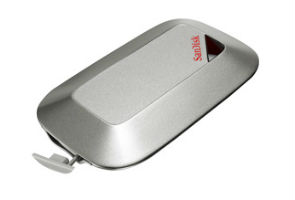
SanDisk launches Memory Vault and world's fastest SD card

SanDisk has launched a slew of new products which include new SD cards, microSD card, a number of USB based products and a Memory Vault.

The Memory Vault intends to be a data preservation drive which will be a available in 8Gb and 16Gb variants. SanDisk claims the device will be able to preserve data for unto 100 years. It will cost Rs 3,499 for the 8GB version and will go upto Rs 5,499 for the 16GB version

.


Apart from the Memory Vault, SanDisk also launched the worlds fastest SD card, the SanDisk Extreme Pro SDXC UH-1 with a data transfer speed of up-to 90mb/seconds. It will be offered in various capacities with the maximum being 64 GB.

SanDisk also launched the world's fastest micro-SD card, the SanDisk Mobile ultra microSDXC, with a speed of upto 30mb/second and  64 GB of memory making it the largest microSD card to date.

The SDXC card range will start from Rs 2,199 for the 8GB version and will go upto Rs 16,299 for the 64 GB versions, while the microSDXC series will cost Rs 899 for the 4GB versions and will go upto Rs 14,799 for the 64 GB versions.


Friday, 16 September 2011

NASA detects planet dancing with a pair of stars

California:  Sometimes the orange sun rises first. Sometimes it is the red one, although they are never far apart in the sky and you can see them moving around each other, casting double shadows across the firmament and periodically crossing right in front of each other.

Such is life, if it were possible, on the latest addition to the pantheon of weird planets now known to exist outside the bounds of our own solar system. It is the first planet, astronomers say, that has been definitely shown to be orbiting two stars at once, circling the pair - which themselves orbit each other tightly - at a distance of some 65 million miles.

A team of astronomers using NASA's Kepler planet-hunting spacecraft announced the discovery on Thursday in a paper published online in the journal Science, in a talk at a conference in Jackson Hole, Wyoming, and in a news conference at NASA's Ames Research Laboratory in Mountain View, California, Kepler's headquarters.

The official name of the new planet is Kepler 16b, but astronomers are already referring to it informally as Tatooine, after the home planet of Luke and Anakin Skywalker in the George Lucas Star Wars movies, which also had two suns.

"Reality has finally caught up with science fiction," said Alan P. Boss of the Carnegie Institution, a member of the research team.

Indeed, John Knoll, who is a visual effects supervisor at Industrial Light & Magic, which is part of Lucasfilm, and who worked on several of the Star Wars movies, joined the Ames news conference and showed a clip from the original movie.

"Again and again we see that the science is stranger and weirder than fiction," Mr. Knoll said. "The very existence of this discovery gives us cause to dream bigger."

While some double-star systems, of which there are billions in the galaxy, have been suspected to harbour planets, those smaller bodies have never been seen.

"This is a direct detection; it removes all doubt," said Laurance Doyle of the SETI Institute in Mountain View, California, who led the discovery team.

Beyond the wow factor, astronomers said the discovery - as so many discoveries of so-called exoplanets have done - had thrown a wrench into another well-received theory of how planets can and cannot form. "In other words," said Sara Seager, a planetary expert at the Massachusetts Institute of Technology who was not part of the discovery team, "people don't really know how to form this planet."

It was long thought, Dr. Seager said, that for its orbit to be stable, a planet belonging to two stars at once would have to be at least seven times as far from the stars as the stars were from each other. According to that, Kepler 16b would have to be twice as far out as it is to survive.

"This planet broke the rule," she said.

Moreover, by timing all the eclipses and transits of the planet and stars in the system, the astronomers have been able to measure the sizes and masses of the stars and the planet to unusually high precision, calibrating models of stellar and planetary properties.

"I believe this is the best-measured planet outside the solar system," Dr. Doyle said.

Technically, Tatooine is probably a ball of rock and gas about the size and density of Saturn living in a system about 200 light-years away, in the constellation Cygnus.

If you go, pack to wear layers. Because those suns move back and forth all the time, temperatures on the planet can change by 50 degrees or more over the course of a few Earth days, from minus 100 to minus 150 Fahrenheit. So the weather is like "a nippy day in Antarctica at best," as Dr. Doyle put it.

Kepler, launched in 2009, is on a mission to determine the fraction of stars in the galaxy that have Earth-like planets. It scrutinizes a patch of some 155,000 stars in the constellations Cygnus and Lyra looking for dips in starlight when planets cross in front of their home stars.

In the case of the Kepler 16 system - home to Tatooine - there turned out to be a lot of dips. The two stars are about 20 million miles apart and produce two eclipses every 41 days as they take turns going in front of each other. One star is about two-thirds the mass of the Sun, the other about a fifth of the Sun.

In addition, there are smaller dips when the planet, which is about 65 million miles from the center of the system - about the distance of Venus from the Sun - passes in front of each of the stars in the course of its 229-day orbit.

The degree of dimming during the planetary transits - those times that a planet crosses the path of something else - usually allows Kepler astronomers to measure the size of a planet relative to the stars. As a result, uncertainties in the properties of stars propagate into uncertainties of as much as 25 percent in the mass of a planet - enough to blur the line between a rocky planet and a gaseous one.

But in the Kepler 16 system, by comparing slight variations in the timing of the transits with calculations of the positions of the stars and the gravitational nudges the bodies give one another, Dr. Doyle's team could deduce the absolute masses and sizes of the stars and planets in the system. That is a tool, they say, that is becoming increasingly valuable for determining the masses of small planets in multiple-planet systems.

As a result, said Dr. Doyle, "it's a laboratory for all sorts of physics and stellar evolution."
The Tatooine laboratory will be available to a wide audience for at least a while longer. Dr. Doyle noted that amateur astronomers in northern Asia, equipped with as little as an eight-inch telescope and an off-the-shelf C.C.D. detector (an electronic device that cameras use to capture images), would be able to record the passage of the Tatooine planet across the brighter star in its system on June 28 next year.

But enjoy it while you can. Because of variations in the planet's orbital plane, as seen from Earth, the planet will stop crossing one of the stars as soon as 2014 and cease transiting the other, brighter one in 2018. It will be around 2042 before the show starts up again for Earthlings.

China nearing billion-mark in mobile phone users

China is heading towards the billion-mark in the number of mobile-phone users with a rapidly rising number of people in the country relying on these phones as their primary medium of communication.

The total number of individuals using cell phones has gone beyond 929 million in a country having a population of 1.34 billion.

According to statistics released by the Ministry of Industry and Information Technology (MIIT), more Chinese citizens are relying on their mobile phones as their primary method of communication, Xinhua reported.


China's mobile phone operators added 70.83 million new subscribers in the first seven months of this year, MIIT said in a statement on its website, adding this brought the country's total number of cell phone users to 929.84 million.

Fixed-line telecommunication companies, however, lost 4.89 million subscribers during the January-July period.

The total number of third-generation (3G) mobile phone service subscribers expanded to 87.2 million by the end of July, according to MIIT.

The entire telecommunications industry collected 559.46 billion yuan ($87.6 billion) in business revenues during the January-July period, up 10.1 percent year-on-year, MIIT stated.