Wednesday, 5 September 2012

Nokia launches Lumia 920 with windows phone 8


Nokia unveiled on Wednesday in New York City the Lumia 920 phone, which will introduce the next phase of Windows Phone to run on Windows 8.
The news comes just one day after Apple announced its next-generation iPhone event on Sept. 12, heightening the need for rivals to come out with truly competitive devices.
The new flagship phone supports wireless charging and Nokia’s PureView 41MP camera, along with a 1080p HD camcorder. Its “floating lens” optical image stabilization technology allows users to take sharp, crisp pictures even when it’s dim. It packs a Qualcomm Snapdragon S4 processor and built-in wireless charging.
The device also introduced “Nokia City Lens” and “Nokia Maps,” true offline maps with augmented reality. By pointing the Lumia 900 at a city block, the phone reveals virtual “signs” beside the storefronts, with business and location information.
Last year around this time, Nokia announced its two Windows Phone devices — the Lumia 710 and Lumia 800 — during Nokia World in London. The devices were the first phones to run Windows Phone 7, and the first phones to result out of Nokia’s partnership with Microsoft.
However, this isn’t the first Windows 8 device to hit the scene. Samsung last week announced its Windows Phone 8 during the 2012 IFA conference in Berlin, deflecting some of the attention away from Nokia.
But Nokia has a tall order to live up to — in fact, its Lumia 900 device was dubbed one of the best Windows phones to ever hit the market.
Earlier this year, Microsoft announced plans to grow its Windows Phone operating system. Windows Phone 8 is reworked from the ground up and is compatible with Windows 8 itself.

Hulk Smash iPad: With Avengers Initiative, Marvel Brings The Avengers To Mobile


Starting with Iron Man, Disney-owned Marvel famously built a connected cinematic universe for its superhero movies, and the strategy paid off spectacularly this year with the release of The Avengers. Now the company is revealing universe-building aspirations in mobile and social gaming, with the launch of Avengers Initiative, which it’s describing as its biggest mobile release yet.
Patrick Moran, the title’s lead game designer at developer Wideload Games, says Avengers Initiativetakes place in the same universe as Avengers Alliancea Facebook game released earlier this year. These games, he says, aren’t just an extension of the comic books or the movies, but take place in a consistent world of their own, with “versions of the characters that are perfected for interactive storytelling.” That connection is more than a story- and character-level — players can earn experience (called Marvel XP) in both the Facebook and mobile games, and experience from one game can be redeemed for rewards in the other.

The Avengers Initiative game is also an attempt at episodic storytelling. This first episode stars the Hulk, who has a fight a bunch of bad guys after they’ve been freed by an event called the Pulse. In future installments, you’ll continue the story while playing as other superheroes in the Avengers. The goal, Moran says, is to release a free new episode every two to three months.
That might seem like a pretty rapid turnaround, but that’s because further installments are built on top of the platform that Wideload spent 14 months developing for the game, Moran says. He adds that as a team of “console guys” (Moran, for example, worked on the Mass Effect franchise) Wideload’s goal was to build a game that could stand up to the console experience: “You want to feel like the Hulk.”
I definitely had fun playing Avengers Initiative on my iPad last night. The story (at least what I saw of it) is pretty simplistic, as is any gameplay that doesn’t involve punching the crap out of someone. But hey, the punching itself is pretty satisfying, and the graphics look good.
Avengers Initiative costs $6.99.

Yahoo CEO Marissa Mayer’s Newest Hire: Jacqueline Reses, EVP Of HR And Talent Acquisition


After appointing former Lockerz CEO Kathy Savitt as Yahoo’s CMO, the company’s new chief Marissa Mayer is staffing another key role—executive vice president of people and development. Mayer has tapped Jacqueline Reses, a private equity exec, to help lead hiring and HR for the company.
                                                           Jacqueline Reses
Prior to Yahoo, Reses led the U.S. media group at private equity firm Apax Partners, she focused on investing in media and technology. In addition, Reses was also involved with the firm’s talent initiatives, including recruiting and training. While at Apax Partners, Reses served on the board of directors or led the investments in Cengage Learning, Intelsat, Nelson Education, Hit Entertainment, and NEP Broadcasting. Additionally, Reses was the CEO of iBuilding Inc., a real estate software business that was launched by Tishman Speyer and Benchmark Capital. Previously, she spent seven years at Goldman Sachs.
Reses, who will report directly to Mayer, will be responsible for leading human resources and talent acquisition as well as corporate and business development globally.
“We are very excited to have Jackie join the Yahoo! team, leading our efforts around finding and retaining the best talent,” said Mayer in a release. “Jackie brings two decades of uniquely applicable operational experience around structuring organizations, programs, and strategies to build world-class teams in media and technology. Her tremendous energy will serve our employees well, and we’re looking forward to her fresh perspectives.”
As Allthingsd’s Kara Swisher reported a few weeks ago, Yahoo’s HR head David Windley departed the company shortly after Mayer was appointed as CEO. Perhaps what’s next up in Yahoo’s hiring plans: a COO.

Thursday, 23 August 2012

New iPhone 5 to be launched on September 21

Big Red have just blacked out vacations for all of its staff from September 21st until 30th, and tracking back the previous rumors about Apple’s most anticipated launched of iPhone 5, it’s somehow a good guess that this means the new iPhone will come on the 21st.
 New iPhone 5 to be launched on September 21
 The official announcement of the new iPhone 5 is rumored to be slotted on September 12th in which followed by the release 9 days after like to what the previous iPhone launches.
 The scenario is true for the original iPhone until the iPhone 4 which the company has kept 9-day or 12-day gap before the handset hit the shelves after the announcement.
 We can also consider Tim Cook’s preference as the former Apple logistics chief, that will more likely to have the release stick on prior 9 days availability.
 So if we’ll project the schedule ahead, by September 12th, Apple might announce the device and roll out pre-orders. Then on September 21st, the Cupertino-giant will release the device for mass consumption.
 Will multiple series of leaks, photos, parts and speculations there’s no doubt that the device is just around somewhere, now are you ready to stay on long lines to get the new iPhone?

Fingertip tingle enhances a surgeon's sense of touch

OUR fingers are precision instruments, but there are plenty of things they are not sensitive enough to detect. Now we can augment their talents – using wearable electronic fingertips that provide tingling feedback about whatever we touch.
John Rogers of the University of Illinois at Urbana-Champaign and colleagues have designed a flexible circuit that can be worn over the fingertips. It contains layers of gold electrodes just a few hundred nanometres thick, sandwiched between layers of polyimide plastic to form a "nanomembrane". This is mounted on a finger-shaped tube of silicone rubber, allowing one side of the circuit to be in direct contact with the fingertips. On the other side, sensors can be added to measure pressure, temperature or electrical properties such as resistance.

Nanotechnology at your fingertips <i>(Image: John Rogers/University of Illinois at Urbana-Champaign)</i> 

People wearing the device receive electrotactile stimulation – a tingling sensation caused by a small voltage applied to the skin. The size of the voltage is controlled by the sensor and varies depending on the properties of the object being touched.
Surgical gloves are one potential application. Rogers, who worked with colleagues at Northwestern University in Evanston, Illinois, and Dalian University of Technology in China, says gloves fitted with the nanomembrane could sense the thickness or composition of tissue via its electrical properties. A surgeon could also whittle away at the tissue using a high-frequency alternating current supplied by a battery attached at the wrist and delivered via the nanomembrane itself, says Rogers.
Fiorenzo Omenetto at Tufts University in Medford, Massachusetts, is impressed. "The work sets the stage for a new generation of devices," he says.
There are applications beyond surgery, too. MC10, the company commercialising the technology, is running animal trials of a nanomembrane "sock" that can be wrapped around the heart. This provides a 3D map of its electrical activity, useful in treating irregular heartbeat.
MC10 is also working with medical device company Medronic to use the membrane inside the heart, sending it in on a limp balloon, which is then inflated to push the membrane onto the heart's interior walls.
Rogers says MC10 is also collaborating with sportswear firm Reebok on a product to be launched by the end of this year. The aim is to build a "body-worn piece of electronics" designed for contact sports, although Rogers declined to say exactly how it will be used.

Monday, 6 August 2012

Steve Jobs was 'receptive' to 7-inch iPad


There is increasing speculation, now backed up by some evidence, that Apple is -- or at least was -- interested in developing a 7-inch version of its groundbreaking iPad tablet.
Thanks to an increasingly vitriolic, ongoing intellectual property trial between Apple and Samsung, documents reveal that Apple was considering a 7-inch iPad back in 2011, and that former Apple co-founder Steve Jobs 'receptive' to the idea before his death. 
"I believe there will be a 7-inch market and we should do one," wrote Apple senior vice president of Internet Software and Services, Eddy Cue, in an email to now Apple CEO Tim Cook and other senior Apple executives on January 24, 2011.
"I expressed this to Steve several times since Thanksgiving and he seemed very receptive the last time. I found email, books, Facebook, and video very compelling on a 7-inch. Web browsing is definitely the weakest point, but still usable," Cue said in the email.
Problems relating to the usability of 7-inch tablets were highlighted by the Nielsen Norman Group. According to the December 2011 report, small tablets such as the Kindle Fire are a compromise because the user interface elements are too small and content isn't optimized for a screen that's bigger than a smartphone yet smaller than that of the iPad.
The email was submitted as evidence in Samsung's cross-examination on Friday, as reported by AllThingsD.
While there is a great deal of evidence to suggest that Apple is working on the next-generation iPhone, an iPad 'Mini' rumors have been far more speculative. Prior to this mention, there have been no official acknowledgement, component leaks or anything to go on beyond rumor and tech gossip. The justification for the iPad Mini seems to revolve around the success of 7-inch tablets such as Amazon's Kindle Fire and Google's Nexus 7. Amazon and Google both have a 7-inch tablet, so Apple needs one too.
However, this leaked email suggest that Apple was thinking about a 7-inch iPad before either the Amazon Kindle Fire or Google's Nexus 7 hit the market, both of which start at the budget price of $199.
The problem with the iPad Mini is that while it is technically possible for Apple to design and build a 7-inch tablet, the problem is pricing the device. It has to be competitive in the face of the Kindle Fire and Nexus 7, but not priced so low as to cannibalize sales of the higher-priced full-sized iPad.
One way that Apple could bring an iPad to market that could compete with the likes of the Kindle Fire and Nexus 7 is by getting the carriers to subsidize the tablet.

Sunday, 5 August 2012

Anti-dengue mosquitoes released in Australia


Some 300,000 mosquitoes with the potential to block the spread of dengue fever have been released in Australia, in a large-scale trial of one of the most promising techniques to rid the world of the disease.Dengue fever infects around 100 million people in the tropics each year, killing 40,000 people annually. Insecticides and nets provide the most effective means to control the disease at present, says Scott O'Neill at Monash University in Melbourne, Australia, but the dengue virus's range continues to grow. In 2009, for instance, it reached Buenos Aires in Argentina for the first time, while France reported its first locally acquired case of dengue fever in 2010
.Harmless bite (Image: Patrick Lorne/Sunset/Rex Features)Last year, O'Neill and colleagues announced plans to release Aedes aegypti mosquitoes infected with a fruit-fly bacterium called Wolbachia. The bacterium makes the mosquitoes less able tocarry the dengue virus, and it could therefore limit dengue transmission if it were to become widespread in the mosquito population.

Billionaire college dropouts


 Bill Gates talked about how Mark Zuckerberg and he have a few things in common. "We both dropped out of Harvard.", Mr. Gates said. "I actually even gave a lecture at Harvard that said, if you have a great idea, don't worry about dropping out and he attended that lecture. So it is a funny connection there."Here's a look at 8 very successful dropouts.


A businessman, designer and inventor. Steve Jobs is best known as the co-founder, chairman and CEO of Apple.Net worth at the time of his death: $8.3 billion


Mark Zuckerberg wrote a program called Facemash in his dorm room at Harvard, that went on to be known as Facebook, the world's largest and most popular social networking site today. Zucker berg dropped out of Harvard University and moved to Palo Alto with Dustin Moskovitz to officially start Facebook.Net Worth: $17.5 billion

Ranked as the world's youngest self-made billionaire, Moskovitz attended Harvard University as an economics major for two years and dropped out to work full time on Facebook with Mark Zuckerberg.Net worth: $3.5 billion 

    Chairman and CEO of Dell, Michael Dell became the youngest CEO at the age of 27 to have his company ranked in the Fortune 500 list.Net worth: $15.9


    Larry Ellison dropped out of the University of Illinois at Urbana -Champaign due to the demise of his adoptive mother. He is the co-founder and CEO of Oracle.Net worth: $36 billion

    Azim Premji was voted among the twenty most powerful men in the world by Asiaweek. Forbes lists him as the third richest Indian and the 41st richest in the world.Net worth: $15.9 billion
    A business tycoon, computer programmer and philanthropist, Bill Gates is the Chairman of Microsoft and was ranked as the wealthiest man in 2011. He dropped out of Harvard to join Paul Allen at Honeywell in 1974.Net worth: $61 billion


      Sunday, 26 February 2012

      USB stick can sequence DNA in seconds


      It may look like an ordinary USB memory stick, but a little gadget that can sequence DNA while plugged into your laptop could have far-reaching effects on medicine and genetic research.
      The UK firm Oxford Nanopore built the device, called MinION, and claims it can sequence simple genomes – like those of some viruses and bacteria – in a matter of seconds. More complex genomes would take longer, but MinION could also be useful for obtaining quick results in sequencing DNA from cells in a biopsy to look for cancer, for example, or to determine the genetic identity of bone fragments at an archaeological dig.
      The company demonstrated today at the Advances in Genome Biology and Technology (AGBT) conference in Marco Island, Florida, that MinION has sequenced a simple virus called Phi X, which contains 5000 genetic base pairs.

      Proof of principle

      This is merely a proof of principle – "Phi X was the first DNA genome to be sequenced ever," says Nick Loman, a bioinformatician at the Pallen research group at the University of Birmingham, UK, and author of the blog Pathogens: Genes and Genomes. But it shows for the first time that this technology works, he says. "If you can sequence this genome you should be able to sequence larger genomes."
      Oxford Nanopore is also building a larger device, GridION, for lab use. Both GridION and MinION operate using the same technology: DNA is added to a solution containing enzymes that bind to the end of each strand. When a current is applied across the solution these enzymes and DNA are drawn to hundreds of wells in a membrane at the bottom of the solution, each just 10 micrometres in diameter.
      Within each well is a modified version of the protein alpha hemolysin (AHL), which has a hollow tube just 10 nanometres wide at its core. As the DNA is drawn to the pore the enzyme attaches itself to the AHL and begins to unzip the DNA, threading one strand of the double helix through the pore. The unique electrical characteristics of each base disrupt the current flowing through each pore, enough to determine which of the four bases is passing through it. Each disruption is read by the device, like a tickertape reader.
      <i>(Image: Oxford Nanopore Technologies)</i>

      Long strands, and simple

      This approach has two key advantages over other sequencing techniques: first, the DNA does not need to be amplified - a time-consuming process that replicates the DNA in a sample to make it abundant enough to make a reliable measurement.
      Second, the devices can sequence DNA strands as long as 10,000 bases continuously, whereas most other techniques require the DNA to be sheared into smaller fragments of at most a few hundred bases. This means that once they have been read they have to be painstakingly reassembled by software like pieces of a jigsaw. "We just read the entire thing in one go," as with Phi X, says Clive Brown, Oxford Nanopore's chief technology officer.
      But Oxford Nanopore will face stiff competition. Jonathan Rothberg, a scientist and entrepreneur who founded rival firm 454 Life Sciences, also announced at the AGBT conference that his start-up company, Ion Torrent, will be launching a desktop sequencing machine. Dubbed the Ion Proton, it identifies bases by using transistors to detect hydrogen ions as they are given off during the polymerisation of DNA.
      This device will be capable of sequencing a human genome in 2 hours for around $1000, Rothberg claims. Nanopores are an "elegant" technology, he says, but Ion Torrent already has a foot in the door. "As we saw last summer with the E. coli outbreak in Germany, people are already now using it," he says.

      Pocketful of DNA

      The GridION will take several hours to complete a human genome, by contrast. The MinION, while not designed for full human genome sequencing, will be marketed for use in shorter sequencing tasks like identifying pathogens, or screening for genetic mutations that can increase risk of certain diseases. Each MinION is expected to cost $900 when it goes on sale later this year.
      "The biggest strength of nanopore sequencing is that it generates very long reads, which has been a limitation for most other technologies," says Loman. If the costs, quality, ease of use and throughput can be brought in line with other instruments, it will be a "killer technology" for sequencing, he says.
      As for clinical applications, David Rasko at the Institute for Genome Sciences at the University of Maryland in Baltimore, says the MinION could have huge benefits. "It may have serious implications for public health and it could really change the way we do medicine," he says. "You can see every physician walking around the hospital with a pocketful of these things." And it will likely increase the number of scientists generating sequencing data by making the technology cheaper and more accessible.

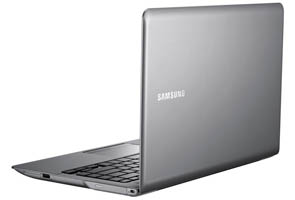
      Samsung unveils two new ultrabooks

      This has been a busy week for the ultrabook market, with Wipro and HP having announced their offerings earlier this week and Samsung following suit yesterday.
      Samsung unveiled two new ultrabooks, a 13" model and a 14" model. Both the variants sport Intel's second generation i5 processors.
      The 13" model comes with 4gb of RAM, a 500 GB hard disk and a built in 16GB of ExpressCache, which is essentially a hard-disk-SSD hybrid. The OS is installed on the 16GB partition, allowing for blazing fast boot speeds while the 500GB hard drive (5400 RPM) serves as a storage drive. The ultrabook can also be configured to house a whopping 8GB of RAM. The 13 inch weighs in at a meager 1.42 kilograms.
      The so called bigger brother, the 14 inch model sports the same Intel i5 processor, but comes with a higher 6GB of RAM. It also features a 1TB hard drive (5400 RPM) along with a 16GB of ExpressCache. A key addition to the 15 inch variant is the AMD Radeon HD 7550M graphic card with a whopping 1GB memory. Adding discrete graphics to the ultrabook segment could be a winning move for Samsung. The bigger screen and discrete graphics add to the weight of the ultrabook, but not by a whole lot as it weighs in at just 1.79 kilograms.
      Both machines come with a slew of ports such as USB 3.0, USB 2.0 and memory card slots (SD,SDHC,SDXC,MMC). Windows 7 Home Premium comes pre-installed on both the machines.
      It would be interesting to see how Samsung's offerings compete with the HP Folio and the Wipro E.go. The HP Folio comes with stock 128 GB SSD and the E.go flaunts the "slimmest ultrabook" status. Not to mention, Samsung claims a 6 hour battery life on their ultrabooks, a significant 3 hours less than what HP is offering on the Folio, but then again, the Folio costs Rs. 70,000 while the Samsung offerings are much cheaper at Rs. 48,900 and Rs. 54,300 for the 13" and 14" models respectively.

      Wednesday, 1 February 2012

      Apple iphone siri...

      the siri iphone to watch...... full of voice command access....

      Magnetic soap could clean up oil spills

      A soap that responds to magnetic fields could be used to clean up oil spills without leaving behind detergents that can harm surrounding wildlife. 

      Researchers at the University of Bristol, UK dissolved iron particles in water that contained chlorine and bromine ions, materials which are commonly found in household products such as mouthwash or fabric cleaner. This created a metallic centre within the soap particles that could be influenced by a nearby magnetic field.

      The team tried out their new soap by placing it in a test tube beneath layers of water and an oil-like substance. Using a magnet, they were able to overcome both gravity and surface tension to lift the soap through the layers and out of the tube.
      MagneticSoap.jpg
      This test shows that it is much easier to remove magnetic soaps from mixtures of other liquids, suggesting they could be used in response to environmental disasters such as oil spills, whereconcerns have been raised about the cleaning substances in use. A magnetic soap could easily be collected after cleaning, reducing the environmental impact.

      Magnetic soaps could also have a range of industrial applications thanks to their ability to change properties such as electrical conductivity or melting point at will with a magnetic on/off switch. These properties are normally altered by adding an electric charge or changing the pH, temperature or pressure of the substance, meaning they can not be reversed.

      Sony's Stringer steps down as president, CEO

      Howard Stringer, the Welsh-born American head of Japanese games, music and electronics giant Sony, is to step down as the firm's president and CEO, the company said Wednesday.

      He will be succeeded by Kazuo Hirai, a games and music veteran at the company, who will take over as president and CEO in April, a statement said, while Stringer will become chairman of the board of directors in June.

      "I look forward to helping Kaz in every way I can so that succession leads inevitably to success," said Stringer. "He is ready to lead, and the time to make this change is now."

      Hirai, 51, played a major role in developing the PlayStation in the 1990s and has spent most of his career at Sony in videogames, movies, music and other software businesses.

      "As challenging as times are for Sony now, were it not for the strong leadership of Sir Howard Stringer these past seven years, we would have been in a much more difficult position," he said.

      The Tokyo-based maker of PlayStation consoles and Bravia television sets is projecting an annual net loss of 90 billion yen ($1.2 billion), its fourth consecutive year in the red, as it reels from the impact of a strong yen, weak sales and severe flooding in Thailand.

      Tuesday, 24 January 2012

      Twitter buys anti-malware firm Dasient

      Micro-blogging site Twitter has acquired internet security firm Dasient for an undisclosed amount. Dasient, which was founded in 2008, is focused on web-scale security problems involving malware and other types of online abuses.

      Twitter, created in 2006, is a communication platform allowing people across the world to interact instantly through 'tweets', or messages not exceeding 140 characters. Twitter has more than 100 million active users worldwide.


      "The Dasient team is excited to announce that we have been acquired by Twitter! Effective immediately, we will be bringing our technology, tools, and team to the revenue engineering team at Twitter," Dasient Co-Founder and Chief Technology Officer Neil Daswani said in a blog post yesterday.

      However, the company has not disclosed the financial details of the deal. In 2009, Dasient launched its web anti-malware platform,capable of scanning URLs and websites for the presence of harmful content. In 2010, Dasient launched the industry's first 'anti-malvertising' service to protect ad networks and publishers from the scourge of malicious ads.


      "Over the last year, we have been very active in securing the ads and content of the some of the industry's largest ad networks and web sites," Daswani added. By joining Twitter, Dasient will be able to apply its technology and team to the world's largest real-time information network.

      As part of the merger, Dasient is winding down its business and is no longer able to accept new customers. In December last year, Twitter received a combined investment of USD 300 million from Saudi Prince Alwaleed Bin Talal Bin Abdulaziz Alsaud and his investment firm Kingdom Holding Company (KHC).

      Dell Latitude ATG 6420


      Laptops built for rough and tumble use are fairly niche and not ideal for everyday use. Their rugged build hinders portability and, unless you are a hiker or adventure sportsman, you will get better value for money elsewhere. Nonetheless, if you are the sort who spends most of your time outdoors and are looking for a laptop that will not be damaged with a fall, then there is a whole category of hard use fdevices you should consider.

      Today we have with us the Dell Latitude ATG which looks like it's built more for combat than computing. Will this be your next adventure sport gadget?

      dell-atg-5.jpg

      Build/design and ports

      The build of the Dell Latitude ATG is fantastic. It's strong, rugged and made out of some very hard plastic with a black rubberized finish around its border. The top of the lid is brushed aluminum grey with black rubberized bordering and the device is so strong that we actually stood on it for a bit and it didn't even flinch under our weight.

      Keep the device closed and it looks just like a briefcase thanks to its handle and square design. Since the device is heavy, this isn't a flimsy briefcase either. It is strong enough to be swung at someone and cause some damage.

      Adding to the overall look and outdoor utility is the fact that all the ports on this laptop have a rubberized cover. These covers help prevent the device from exposure to dust and dirt in an outdoor open environment. The device even has a DVD drive. This adds a little to its weight and size but it's a fair trade-off considering now you don't need to carry that external CD drive.

      One of the biggest drawbacks of the device is that the ports are all over the place. The SD card reader rests on the front panel. Its position is a little inconvenient as it is very close to the briefcase style handle. To the right of the device you have two USB 2.0 ports along with an e-SATA cum USB 2.0 port. The right also has the CD drive along with a Wi-Fi on/off toggle. The left of the device houses a VGA out, one USB 2.0 port and the headphones jack. To the left rear of the device we have an Ethernet port along with the DC in. To the right rear of the device we have the HDMI out.

      The overall placement of the ports is convenient but fell scattered. The design of the device isn't eye candy and resembles the bombing PC found in the Call of Duty video games, which isn't necessarily a bad thing.

      dell-atg-2.jpg

      Keyboard and track pad

      Open up the device and you are greeted with a compact and well laid out keyboard. It isn't chicklet style but is surprisingly comfortable to type on. The keys are springy and feel well-built. We bashed our fingers real hard on this rugged machine only to find out fingers hurt but keyboard stays intact. Laughs apart, the keyboard is seriously one of the best in the business.

      Controlling the mouse however is a mixed experience. You have the pointing stick (why do they still make that? It's horrible!), which isn't the best way to control the mouse. The pointing stick rests between the G, H and B button whereas the left and right click rests under the spacebar. The other is a standard track-pad with a dedicated left and right click. The track pad isn't as large as the one you'd find on a MacBook but it's enough to get the job done. Made out of plastic, the trackpad is fairly smooth and comfortable to use. The same cannot be said about the pointing stick, which we just hate.

      dell-atg-1.jpg

      Display and audio

      The device has a 14-inch display with a resolution of 1366x768 and is a touchscreen. The screen has a rugged black border surrounding it. The best part about the screen is that its brightness and contrast is quite high making it ideal for use in an outdoor situation. The colours look rich and vibrant and the screen is susceptible to very little glare.

      The audio on the device is what you can expect from an average laptop. The speakers are loud, lack bass and have a high midrange. The speakers are located on the front panel of the device. Its placement is pretty ideal if the device is used on as the sound bounces off the table enhancing the volume a bit.

      You could listen to music and enjoy a 720p HD movie on this device with absolute ease. Just remember to turn down the brightness a bit when you are indoors or you're in for one hell of a headache.

      dell-atg-3.png

      Performance

      Apart from being able to survive an accident, a drop and some insane amount of torture, this device also needs to be capable of doing mundane tasks like email, MS office and browsing the Internet along with the occasional gaming needs of the user.

      In terms of the hardware under the hood, the device shows off some impressive specs. It has a 2.7GHz Intel core i7 processor, 4GB of RAM running a 64-bit Windows 7 OS and a 320GB HDD. It also has dual graphics i.e., Intel integrated and an Nvidia NVS 4200M graphics card. The 3D mark score was a bit disappointing at 2441 which means that you can't expect it to run all the latest games smoothly. If gaming is your focus we suggest you look at a much more delicate Alienware laptop.

      On the PC mark score, the device scored 5462. That's an above average score and you can do all your everyday tasks along with a bit of heavy software use with ease. 

      The battery life of the device is a bit of a disappointment. Especially since the device is built to be used outdoors. Run the device to its fullest potential and it will last you a little over an hour and a half. Used sparingly however and the device may just carry on a bit more.

      dell-atg-4.jpg

      Verdict

      The power under the hood along with a great keyboard, fantastic display and rugged build make this device ideal for your camping trips. Just be prepared to endure the extra weight and space of the device. For around Rs. 1,00,000 this is targeted at the adventure sport hungry businessmen who needs access to a notebook all the time. The rest of us can do with a Mac or a high end Windows based gaming notebook for the same price.

      Pros:
      Fantastic build
      Great Keyboard
      Great display for outdoor use

      Cons:
      Pointing stick is bad
      Heavy
      Battery life
       
      Score:
      Performance: 3
      Price: 3
      Ease of setup: 4
      Ergonomics: 4
      Wow Factor: 3
      Overall: 3.5 

      Google Plus user base crosses 90 million mark

      Google's online social networking service 'Google Plus' has crossed 90 million users mark since its launch in June. Google Plus now has attracted 90 million users,reflecting the huge interest in the social networking site which was opened to the public on September 20. That more than doubles the 40 million that Google reported in October.

      Earlier, Google Plus service was available only through invitation as part of trial runs. Interestingly, rival Facebook took about four years to reach 90 million users. Facebook, founded in 2004, has now 800 million users globally. 

      "I am super excited about the growth of ... Google Plus,which now has 90 million users globally  well over double what I announced just three months ago. By building a meaningful relationship with our users through Google Plus we will create amazing experiences across our services," Google CEO Larry Page said while announcing the company's latest quarterly earnings.

      Google unveiled 'Google Plus' in late June as part of efforts to garner a share of the lucrative social networking space that has so far been dominated by Mark Zuckerberg led Facebook. 

      Since launch, Google has added toolbars and other buttons on its websites to aggressively promote the service. During the quarter, Google has reported a net income to USD 2.71 billion in for October-December, which analysts termed as below market expectation.It registered revenue of USD 10.58 billion for the quarter ended December 31, 2011, an increase of 25 per cent from the year-ago period. 

      Wednesday, 4 January 2012

      Jupiter's heart is dissolving

      Even the mighty can lose heart. New calculations suggest that Jupiter's rocky core is dissolving like an antacid tablet plopped in water.
      The work could help explain why its core appears smaller and its atmosphere richer in heavy elements than predicted.
      Giant planets like Jupiter and Saturn are thought to have begun their lives as solid bodies of rock and ice. When they grew to about 10 times the mass of Earth, their gravity pulled in gas from their birth nebula, giving them thick atmospheres made mainly of hydrogen.
      Curiously, some studies have suggested that Jupiter's core may weigh less than 10 Earths, while the core of its smaller sibling Saturn packs a bigger punch at 15 to 30 Earths. Last year, researchers led by Shu Lin Li of Peking University in China offered a grisly explanation – a rocky planet bigger than Earth slammed into Jupiter long ago, vaporising most of the giant planet's core.

      That scenario could also explain another mystery – why Jupiter's atmosphere contains a higher fraction of heavy elements than the sun, whose composition is thought to mirror that of the nebula that gave birth to the solar system's planets.
      Now Hugh Wilson and Burkhard Militzer of the University of California, Berkeley, suggest a competing – though no less macabre – explanation: Jupiter's core has gradually been dissolving since its formation 4.5 billion years ago.

      Quantum calculations

      Other researchers had propoposed that the intense pressures and temperatures at Jupiter's heart might cause its core to dissolve into the surrounding atmosphere, which is at such high pressure that it behaves somewhat like a liquid.
      "We sat down to figure out, does this actually happen?" says Wilson.
      The researchers used the equations of quantum mechanics to see how the mineral magnesium oxide – thought to be a constituent of Jupiter's core – behaves at Jupiter-like pressures of about 40 million Earth atmospheres and temperatures of 20,000 °C. Such conditions cannot be recreated in Earth labs – some experiments can approximate the pressures but overshoot the temperatures by factors of a hundred or so.

      Mixed up

      They found that magnesium oxide does indeed dissolve into its fluid surroundings in those conditions. "You can think of it as if you have some salt in the bottom of a glass. Pour warm water on the salt and it will start to dissolve in the glass, with salty water in the bottom and less salty water at the top," says Wilson.
      He suspects that the dissolved rock might get mixed into the rest of the atmosphere over time. "It could at least partially explain both the enrichment of heavy elements in the outer atmosphere and also the fact that its core may be smaller than [formation] models would suggest," Wilson says.
      The calculation also suggests why Saturn – which is about one-third the mass of Jupiter – seems to have a heftier core. Conditions inside the ringed planet are simply not as extreme as they are inside Jupiter, so if Saturn's core is dissolving at all, "it will be a lot slower", says Wilson.

      Heartless planets

      The process probably happens much more rapidly in planets more massive than Jupiter, the team thinks. Dave Stevenson of the California Institute of Technology in Pasadena agrees. "Core erosion is probably more effective as the mass goes up," he says.
      "I suspect that for very large 'super-Jupiters', you would have no core at all," says Wilson. If so, this should boost the concentration of heavy elements in their atmospheres, which future telescopes might be able to detect, he says.
      Does the fact that Jupiter's heart is dissolving sadden Wilson? Quite the opposite, he says. "It's kind of a sign that Jupiter is still forming – it hasn't yet settled down into a steady state."

      Smart Guide to 2012: The US cyber election

      The way we live our lives online will make it easier for US presidential candidates to target their message

      Do you live in Ohio and tweet about your church? The Republicans would like to have a word with you. Live in California and post pictures of your Toyota Prius? Barack Obama would like you to start a fundraising page.
      The US presidential election in November 2012 is likely to be the most data-intensive campaign in history. The reason? We are sharing more information about ourselves - our interests, social connections and online behaviour - than ever. Savvy candidates can increasingly use this data to predict how we are likely to vote, which of us to target and how best to reach us.
      In 2008, Obama's campaign used online social networks to not only get the word out, but also to track which issues groups of voters cared about most. They built computer models of voting districts that helped determine where to best focus money and volunteers during last minute, on-the-ground campaigning.
      2012 could see campaigns bring this kind of data-assisted decision-making to the level of individual voters. Campaign strategists have long combined voter registration data with consumer databases and census information to construct voter profiles consisting of thousands of variables, such as the size of someone's house, or what magazines they read. Now these profiles can be beefed-up with real-time analysis of political sentiment via Twitter and blog posts.
      Detailed information about individual voter interests and key political issues could also allow campaigns to craft narrowly targeted messages. Do you tweet about your love for Battlestar Galactica? Don't be surprised if the political messages you see online through banner ads or sponsored links are tailored towards a candidate's stance on science or space exploration.
      Whether this kind of customised campaigning comes across as charming or creepy remains to be seen. But with about half of all Americans now on Facebook, voters will have to get used to campaigns using their information in all kinds of ways. Combine these huge data sets with sophisticated prediction algorithms and 2012 could mark the rise of the ultimate political machine.